In the realm of precision shooting and tactical applications, the use of optics has evolved remarkably, with red dot sights becoming an indispensable tool for many gun enthusiasts and professionals alike. Among these, a minute of angle (MOA) red dot sight stands out, promising not just quick target acquisition but also the potential for measuring distances. The overarching question arises: Can you use an MOA red dot to estimate range? This article explores the nuances of this topic, promising a shift in perspective and piquing curiosity about the capabilities of this innovative technology.
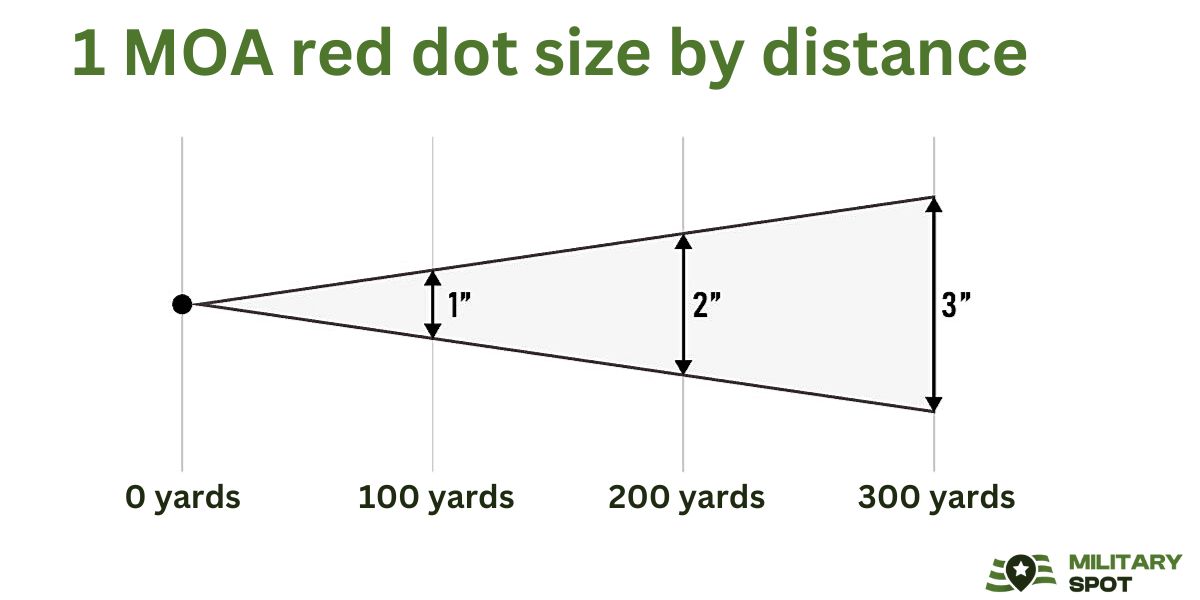
The first step in dissecting this question is to grasp the fundamental concept of the MOA itself. MOA, short for minute of angle, is an angular measurement that translates into approximately 1.047 inches at 100 yards. For practical purposes, it is often rounded to 1 inch at this distance. When utilizing an MOA red dot sight, shooters are dealing with a reticle that encompasses a specific diameter corresponding to this measurement. Understanding how this works will form the cornerstone of your ability to estimate range effectively.
To embark on a successful range estimation journey with an MOA red dot, you must first acknowledge the significance of target size and its correlation to distance. The arithmetic is straightforward: the larger the target appears through your reticle, the closer it is likely to be. Conversely, smaller targets indicate greater distances. This foundational principle establishes the groundwork for distance estimation, as many operators utilize a variety of known target sizes, from man-sized silhouettes to standard animal targets, to gauge distance based on their perceived size when viewed through the optic.
Consider a common scenario: a silhouette target standing at a reputable distance—let’s say 100 yards. When viewed through a 2 MOA red dot, the dot itself would cover approximately 2 inches of the target. A keen observer can ascertain that if the target appears considerably smaller than the dot, it is likely situated beyond 100 yards. The ability to visually relate target size to dot size enables shooters to refine their distance estimations with a remarkable degree of crispness.
Another measurement methodology involves the use of ballistic data. Armed with an understanding of bullet drop relative to distance alongside your specific ammunition’s ballistics, you can leverage your MOA red dot to serve as a rudimentary range-finder. By understanding at what distance a specific bullet drops a certain number of inches from the line of sight, shooters can reverse-engineer their shots. For instance, if you know that your round will drop 4 inches at 200 yards, you can apply this knowledge while looking downrange through your dot sight to estimate distance based on how far off the point of impact your shots would land.
Moreover, familiarity with your shooting platform plays a crucial role in optimizing range estimation. Different rifles and pistols possess unique trajectories influenced by barrel length, muzzle velocity, and bullet weight. Therefore, regularly practicing with your specific firearm and developing an intimate familiarity with its characteristics will not only bolster your accuracy but also enhance your proficiency in estimating distances using your MOA red dot sight. Adjustments to your technique based on feedback and variable conditions may yield improved precision, making the act of distance estimation a significantly more reliable endeavor.
Integrating technology with tradition offers yet another dimension to this conversation. Some modern red dot sights even incorporate built-in range-finding capabilities or reticles calibrated for specific distances and ballistic trajectories. By fusing electronic and optical technologies, these devices can provide precise range estimates at the press of a button or based on how the reticle interacts with the target shape. Relying on such high-tech solutions can both streamline the shooting process and instill confidence, empowering users with the ability to engage in complex shooting scenarios effectively.
However, despite the myriad advantages conferred by MOA red dots in estimating range, certain limitations must be acknowledged. Environmental factors—such as windage, humidity, and atmospheric conditions—can adversely affect your shooting accuracy and thus alter your range estimations. The human factor, too, cannot be dismissed; stress and fatigue can distort perception, leading to inaccurate assessments.
Your proficiency in estimating range is an amalgamation of knowledge, experience, and practicality. Developing an innate sense for distance estimation using an MOA red dot sight demands time, practice, and a keen eye for detail. While the optical tool serves as an exceptional catalyst for precision targeting, it should complement, not replace, a deep-seated understanding of marksmanship principles.
In conclusion, the ability to estimate range utilizing an MOA red dot sight is not merely plausible; it is indeed practical when applied with the correct methodologies and insights. The combination of tactical knowledge, target size recognition, bullet ballistics, and terrain factors can empower shooters to make impressive distance estimations and enhance their overall shooting performance. The MOA red dot serves not only as a sighting tool but also as a bridge—connecting the art of traditional marksmanship to the technological advancements of modern optics. Whether you are a seasoned marksman or an aspiring sharpshooter, exploring this capability shifts one’s perspective on the utility of red dot sights, transforming them into multifaceted instruments of precision and skill.









Leave a Comment