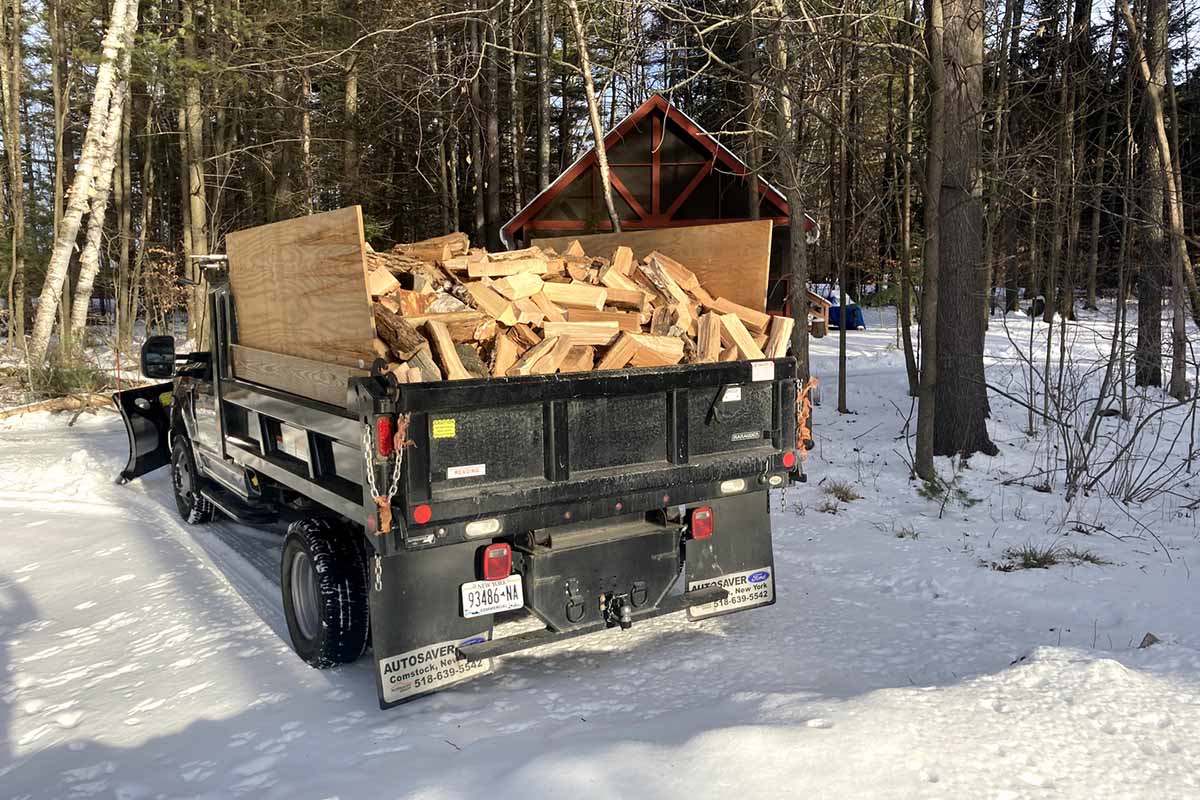
When contemplating the weight of a cord of wood, one may envision a heavy burden resting upon the forest floor—an assemblage of timber waiting to serve a myriad of purposes. Much like the foundations of a home or the heart of a roaring fireplace, a cord of wood is not merely an agglomeration of logs but an essential resource imbued with multifaceted significance. Each piece tells a story, from its growth in the bosom of sprawling forests to its transformation into fuel for warmth and cooking. In this exploration, we shall dissect the weight of a cord of wood, delving into its nuances, factors influencing its mass, and the diverse applications it serves.
Understanding the Measurement: A Cord Defined
The term “cord” is a unit of measure specific to firewood, and it embodies more than just dimensions; it evokes an image of nature’s careful craftsmanship. A cord is defined as a volume of wood measuring 128 cubic feet, equivalent to a stack measuring 4 feet high, 4 feet wide, and 8 feet long. This quantity may appear deceptively compact, akin to a neatly stacked collection of chapters waiting to be read. However, the pivotal question remains: how much does this quantitative bundle of nature weigh?
The Variables at Play: Wood Species and Moisture Content
The weight of a cord of wood fluctuates substantially, primarily influenced by two critical factors: the species of wood and its moisture content. Like characters in a literary saga, different species introduce unique charm and weight to the narrative. For instance, oak, known for its density and durability, can weigh upwards of 4,000 pounds per cord when seasoned (well-dried). In contrast, lighter woods such as pine or poplar can weigh considerably less, sometimes descending to around 2,800 pounds per cord when dried.
Moreover, moisture content plays a defining role in determining weight. Fresh cut, or “green” wood, brimming with water, can nearly double the weight of seasoned wood. This phenomenon transforms the cord into a veritable brick, laden with moisture that can lead to inefficient burning and excessive creosote buildup in chimneys. Thus, while a seasoned cord of oak might gracefully tip the scales, a freshly cut one does so with a lumbering heaviness.
The Delicate Dance: Calculating Weight
Understanding the weight entails not just knowing species and moisture content, but it also requires familiarity with the intricacies of bulk density. Bulk density refers to the mass of the wood per unit volume, a measure that encapsulates the characteristic that each type of wood exhibits. For instance, hardwoods have a denser structure than softwoods; hence, they typically present a greater weight per cord.
To calculate the weight of a cord, one may employ a straightforward formula: weight = volume x density. Given the established volume of a cord (128 cubic feet), one must multiply this by the corresponding density of the specific wood type in question. It is a simple yet profound mathematical equation, much like the act of bringing together diverse life experiences to craft a holistic worldview.
Applications and Considerations: The Journey Beyond Weight
Yet, with such charm comes responsibility. Individuals seeking to purchase or harvest wood should consider sustainable practices, ensuring that their endeavors do not encroach upon the delicate ecological balance. Just as the weight of a cord serves as a testament to nature’s might, it also serves as a reminder of the stewardship human beings must exercise over natural resources.
Conclusion: A Tactile Connection to Nature
The weight of a cord of wood is a compelling reflection of the interconnectedness of life, nature, and necessity. As pondered above, it varies intricately based on species, moisture content, and density, combining to reveal both its physical essence and its broader significance in our lives. From heating our homes to enhancing our environments, wood’s weight is but a single facet of its multifarious roles. In every cord, there lies a promise—a promise of warmth, a narrative steeped in growth, a tactile connection to nature’s grandeur. Hence, the next time one contemplates a cord of wood, let it be seen not simply as a mass of timber but as a vibrant embodiment of life, legacy, and responsibility.










Leave a Comment