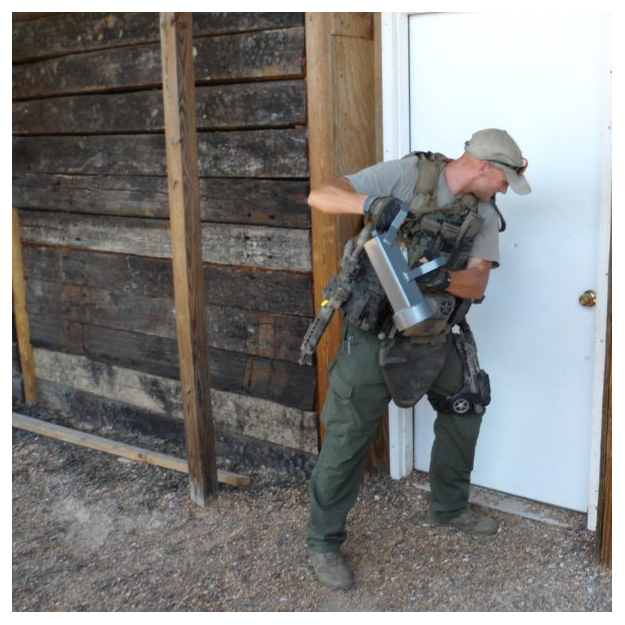
Have you ever pondered how much force is necessary to breach a door? Imagine a scene where time is of the essence, and every second counts. In high-stakes situations, the right tools and understanding of physics can make all the difference. One particularly intriguing tool is the breaching ram, commonly utilized by tactical teams to gain entry in emergency situations. How much force does this remarkable device generate, and can you visualize the sheer power required to accomplish such feats?
The breaching ram, or “door ram,” has garnered attention for its effectiveness in swiftly removing obstacles. Designed for rapid entry, it is a powerful tool utilized in various fields—from law enforcement to military operations. Understanding the force behind it involves both science and an appreciation for the engineering that makes such a device effective. So, let’s delve into the details and explore how much force is exerted when using a breaching ram to open a resistant door.
1. Understanding the Breaching Ram
A breaching ram is typically constructed from heavy-duty steel, featuring a substantial cylindrical head that delivers concentrated force. This head is crucial; it maximizes impact on the target surface. The design is often intuitive, allowing operatives to wield it effectively in high-pressure scenarios. But how does its construction relate to the force it can generate?
2. Force Fundamentals
To unveil the mechanics of a breaching ram, it’s essential to grasp some physics concepts. Force is defined by the equation F = m × a (force equals mass times acceleration). Thus, the ram’s mass combined with the speed at which it is deployed will dictate the force exerted on the door.
Picture a breaching ram with a mass of 30 pounds (approximately 13.6 kilograms). If an operative swings it, achieving an acceleration of 15 feet per second (around 4.57 meters per second), the force applied to the door can be calculated as follows:
- F = 30 lb × 15 ft/s = 450 lb-ft/s
In essence, this force translates to a significant impact, capable of compromising most entry points.
3. Forces Acting on the Door
When the breaching ram strikes, it is not merely a one-dimensional force at work. Various factors contribute to the outcome:
- Material Composition: The door’s resistance largely depends on its material—wood, metal, or reinforced composite.
- Structural Integrity: Older doors may yield more readily compared to newer, sturdier designs.
- Hinges and Lock Mechanics: A door’s locking mechanism can further complicate the breaching process; some locks are engineered to withstand immense pressures.
For instance, a standard wooden door may yield after a definitive impact, while a steel security door may require multiple strikes. Assessing the type of door dictates the strategy employed.
4. Practical Application of the Breaching Ram
In the realm of tactical operations, the correct application of force is paramount. Tamers of the breaching ram train rigorously to harness their strength effectively and ensure precision. During a breach, operators often employ techniques such as:
- Cues and Coordination: Teams rely on synergy to ensure that the strike is delivered at the optimal point on the door.
- Repeated Impact: If the first strike is ineffective, subsequent strikes are adjusted dynamically to modify the point of force application.
- Time Management: Every moment is crucial; therefore, deploying the breaching ram is a calculated act that combines physical prowess and mental acuity.
5. Safety Considerations
While the dispatch of a breaching ram is an impressive display of force, safety must remain paramount. Operators face risks both from the force they exert and from potential debris. Therefore, proper training and protective gear are indispensable. Enforcing safety protocols mitigates risks and enhances operational effectiveness.
6. Innovations and Technology
The evolution of breaching tools is remarkable. Today’s tactical community is not only relying on traditional ram designs but is also exploring high-tech options that harness mechanical principles for enhanced breaching efficiency. These innovations promise to revolutionize the landscape of rapid entry while minimizing collateral damage.
Conclusion: The Heart of the Challenge
When faced with the inquiry of how much force a breaching ram exerts, we find ourselves at the intersection of physics, engineering, and the human element. Understanding the mechanics of such a tool not only showcases its mechanical prowess but also instills a greater respect for the profound responsibility that rests in the hands of those who wield it. Whether pondering its application in law enforcement or simply appreciating the science behind it, the challenge remains: can we truly grasp the power that lies within a breaching ram? Exploring this concept continues to inspire discussions and drive innovation, blending practicality with an appreciation for the intricate dance of force and purpose.









Leave a Comment