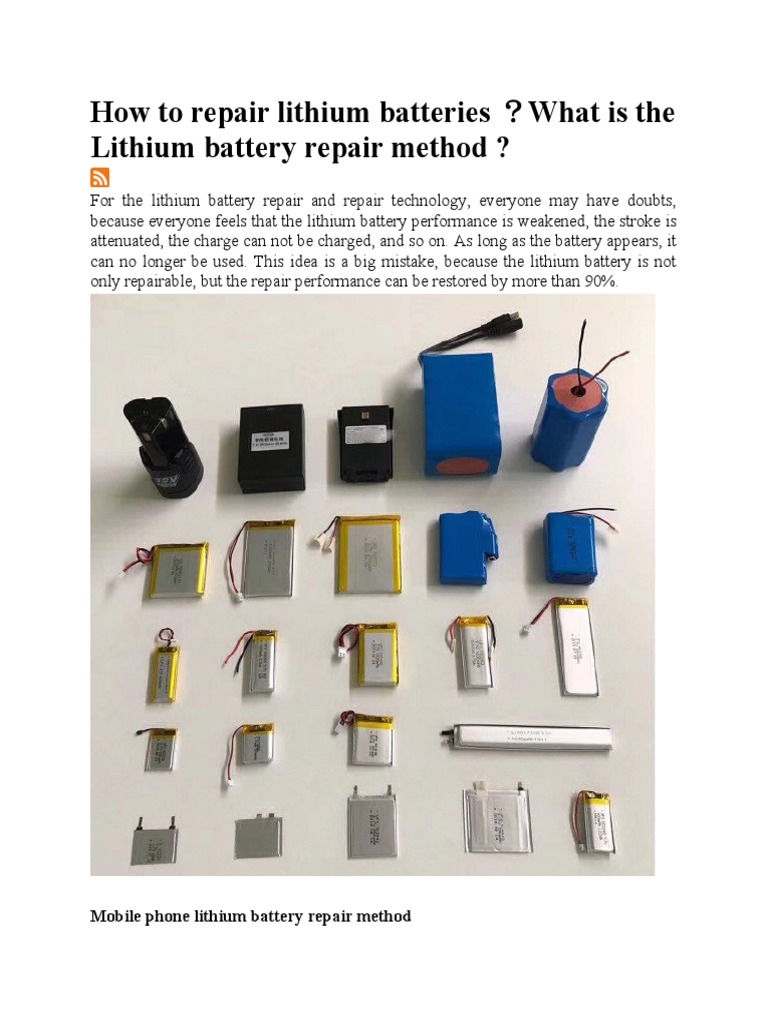
In the age of rapid technological advancements, lithium batteries have become the unsung heroes, powering everything from smartphones to electric vehicles. Yet, like a phoenix rising from the ashes, a depleted lithium battery can often be coaxed back to life with the right approach. This guide will delve into the art and science of restoring lithium batteries, equipping you with the knowledge to rejuvenate this modern marvel.
Understanding Lithium Battery Composition
A lithium battery is a delicate assemblage of chemical compounds, elegantly designed to store energy efficiently. Within its structure, lithium ions flit back and forth between the anode and cathode, akin to dancers in a meticulously choreographed routine. However, over time, this harmony can be disrupted, resulting in diminished performance.
Before attempting to restore a lithium battery, it is essential to comprehend the intricacies of its components. The anode, typically composed of graphite, serves as a reservoir for lithium ions during charging, while the cathode, commonly made from lithium metal oxide, releases these ions during discharge. Recognizing this dualistic nature is crucial for understanding the restoration process. When properly maintained, these components can endure the test of time, but neglect and misuse can lead to irreversible damage.
The Signs of a Distressed Battery
Just as a weary traveler exhibits signs of fatigue, a lithium battery, when on the brink of failure, offers clear indicators of its distress. Identifying these signs early can be the difference between salvaging a battery and consigning it to the electronic graveyard.
- Rapid Discharge: A telltale sign that your battery is struggling is its inability to hold a charge. If your device dies within a short timeframe despite being fully charged, it may be time to intervene.
- Overheating: Heat is the nemesis of battery longevity. If your battery feels unusually warm during use or charging, it is a cry for help.
- Physical Deformation: A swollen battery is a grave warning signal. If you notice any bulging or irregularities, it’s best to cease usage immediately to prevent potential hazards.
- Charging Inconsistency: Erratic charging patterns, such as charging taking longer than before, can indicate internal degradation.
Prepare for Restoration
Preparation is paramount in any endeavor, and resting a lithium battery is no exception. Begin by gathering essential tools and materials, ensuring you have a clean, dry workspace to facilitate your restoration efforts.
- Safety Gear: Employing goggles and gloves can provide an additional layer of protection against any unforeseen mishaps.
- Digital Multimeter: This tool will allow you to measure voltage and diagnose your battery’s condition accurately.
- Charger: A compatible charger with regulated output will help ensure a safe charging process.
Step-by-Step Restoration Process
Once you’ve prepared your environment and tools, it is time to initiate the battery restoration process. Each step must be undertaken with patience and precision, as rushing can lead to irreversible damage.
- Voltage Check: Using the digital multimeter, measure the battery’s voltage. Lithium batteries typically operate between 3.0 to 4.2 volts per cell. If the voltage is below 3.0 volts, extreme caution is required, and consider recycling.
- Equalizing Charge: If the voltage is low but above the danger threshold, connect the battery to a charger designed to restore low-voltage cells. Monitor closely; charging should be gradual and never exceed the manufacturer’s specifications.
- Controlled Discharge: After charging, allow the battery to discharge fully. This cycle helps recalibrate the battery’s memory and can restore its longevity.
- Recharging: Recharge the battery fully after discharging. Keeping a consistent cycle of complete discharge and recharging can enhance battery performance.
Tips for Battery Maintenance
Now that you’ve restored your lithium battery, maintaining its vitality is crucial. Here are some practices to foster a healthy battery lifestyle:
- Avoid Extreme Temperatures: Lithium batteries thrive in moderate temperatures. Storing them in excessively hot or cold environments can hasten deterioration.
- Maintain Charge Levels: Keeping the battery between 20% and 80% charged can prolong its lifespan. Frequent deep discharges can expedite decline.
- Use Smart Chargers: Invest in a quality charger that employs advanced technology to manage charging cycles intelligently, reducing stress on the battery.
The Final Thoughts
Restoring a lithium battery is akin to reviving an old friend; it requires patience, understanding, and a meticulous approach. By adhering to the outlined guidelines and instilling good maintenance habits, you can extend the life of your battery, ensuring it continues to fuel your devices and, by extension, your daily life. While every battery may not be resurrected, the journey towards restoration can be rewarding, rekindling connections with our indispensable technological companions.









Leave a Comment