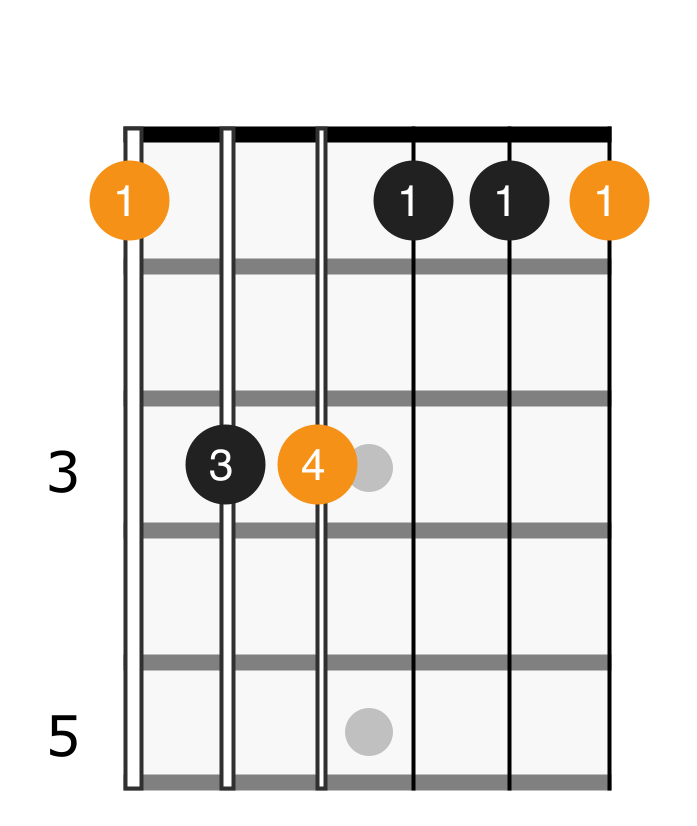
The F minor chord, a cornerstone of tonal music, evokes a spectrum of emotions through its rich harmonic depth. In both classical and contemporary genres, mastering this chord unlocks a myriad of creative possibilities for guitarists. This article seeks to illuminate the nuances of the F minor chord on the guitar, providing you with a comprehensive guide that encompasses its forms, applications, and techniques.
1. Understanding the F Minor Chord
The F minor chord, designated as Fm, is constructed from three primary notes: F, Ab, and C. The unique arrangement of these intervals creates a sound that is both haunting and emotive. The chord functions predominantly as a minor triad, meaning it comprises a root note (F), a minor third (Ab), and a perfect fifth (C). Additionally, it can be enriched through various extensions and voicings, adding layers to its character.
2. Basic F Minor Chord Shapes
When it comes to playing the F minor chord on guitar, you’ll encounter several basic shapes that provide a solid foundation. Below are a few common voicings:
- Barre Chord Shape: The most prevalent shape for Fm is the barre chord, played by barring the first fret with your index finger. Press down on the first fret of the low E string and strum down, followed by your middle finger pressing on the second fret of the G string, and finally your ring and pinky fingers on the third fret of the A and D strings, respectively.
- Open Chord Variant: Although the open version of F minor is less common, it exists by employing open strings strategically. However, due to the restrictions of standard tuning, this version remains more elusive and difficult to master.
- Alternate Fingerings: Guitarists often experiment with finger placement to find sounds that resonate more personally. Testing different finger positions and inversions can yield magical results.
3. Advanced Voicings and Extensions
To delve deeper into the acoustic palette of F minor, consider additional voicings and extensions:
- F Minor 7 (Fm7): This voicing includes the notes F, Ab, C, and Eb. It adds a layer of sophistication and can be particularly effective in jazz contexts.
- F Minor 9 (Fm9): Adding D to the Fm7 formula enriches your chord further, producing a lush harmonic texture that’s perfect for ballads or soulful grooves.
- Inversions: Exploring inversions—playing the same chord notes in different orders—can yield fresh sounds, making your music more dynamic. Try placing the Ab note in the bass or even the C note for varied emotional impact.
4. Techniques for Strumming and Picking
Once you’ve grasped the shapes and voicings, the next logical step is to incorporate diverse techniques into your repertoire. This expands not only your skill set but also the musicality of your performance.
- Strumming Patterns: Employ various strumming patterns to accentuate the feelings behind the F minor chord. Downstrokes paired with syncopated upstrokes can create rhythmic intrigue.
- Arpeggios: Breaking the chord into individual notes and playing them one after another can bring a delicate, flowing character to your music. This is particularly effective in slower, more contemplative pieces.
- Hybrid Picking: Combining the use of a pick with the fingers can produce a smoother, jazz-influenced sound, adding layers of complexity to simple progressions.
5. Common Chord Progressions
Integrating the F minor chord into common chord progressions is essential for practical application in songwriting and improvisation. Here are a few proficient examples:
- Fm – Db – Ab – Eb: A progression that provides a classic pop feel, perfect for hooks and anthemic choruses.
- Fm – Bbm – C7 – Fm: This cyclical pattern offers an introspective vibe, great for storytelling within lyrics.
- Fm – C – Gm – C: A wonderful progression that weaves tension and resolution seamlessly, ideal for building emotional climax in a piece.
6. Exploring the Emotional Terrain
The emotional weight of the F minor chord cannot be understated. It often conveys melancholy, introspection, or longing. Incorporating this chord into your compositions allows you to express a range of sentiments that might resonate deeply with your audience. Utilizing storytelling through music adds a unique dimension, inviting listeners to embark on a shared emotional journey.
7. Practice Tips and Resources
To effectively master the F minor chord, consistent practice is paramount. Here are some actionable tips to enhance your learning:
- Regular Exercises: Dedicate time to practice transitions between F minor and other chords in your repertoire to improve fluidity.
- Use a Metronome: Practicing with a metronome can aid in maintaining rhythm and clarity.
- Video Resources: Numerous online tutorials are available that provide visual demonstrations of chord shapes and progressions, catering to various learning styles.
In conclusion, the F minor chord is an expansive canvas for musical exploration. Whether you are a novice guitarist or an experienced musician, understanding its construction, voicings, and emotional weight fosters deeper creativity in your compositions. By incorporating a plethora of techniques, chord progressions, and expressiveness, you can transform the F minor chord into a powerful tool that enhances your musical journey. Dive into this emotive chord, and allow it to guide your artistry into new realms.










Leave a Comment