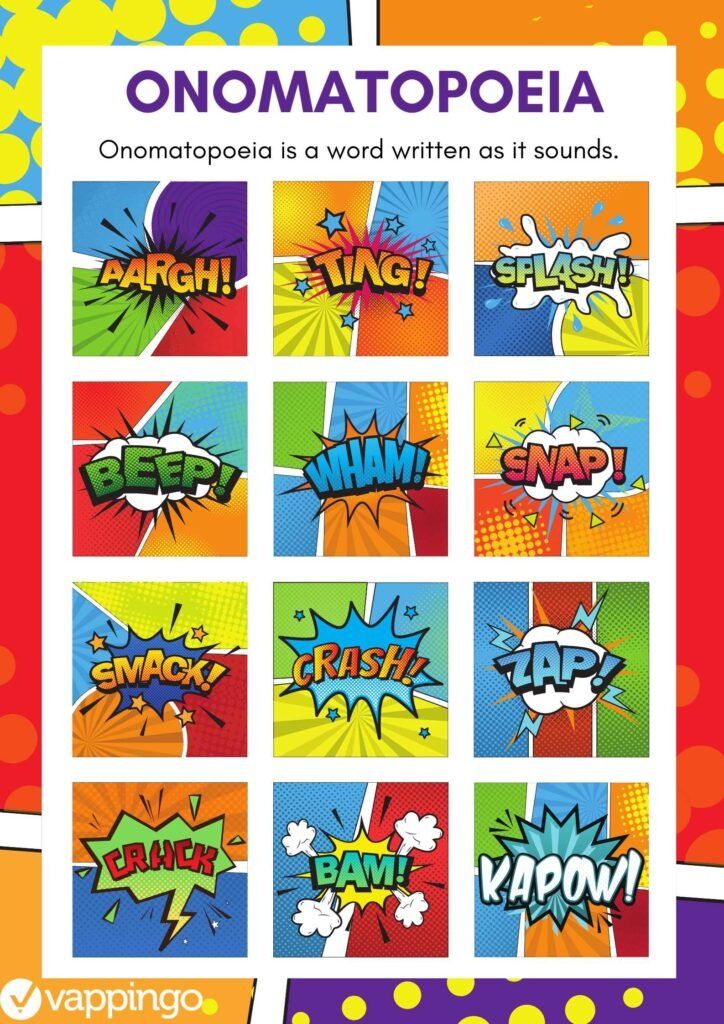
Onomatopoeia, a delightful linguistic phenomenon where words evoke the sounds they describe, piques our curiosity by transforming mere language into vibrant auditory experiences. When we encounter a sentence embedded with onomatopoeic elements, we are ushered into a world where sound paints as evocative a picture as imagery itself. This exploration unfolds in a surprising manner: it urges us to reconsider how we perceive communication, compelling us to listen. Here, we delve into the nuances of sentences infused with onomatopoeia, illuminating their significance, variety, and imaginative potential.
The essence of onomatopoeia lies in its ability to create a direct connection between sound and meaning. Classic examples include “buzz,” “hiss,” “bang,” and “sizzle.” When woven into prose or poetry, these words transcend their simple definitions, adding a dynamic quality that breathes life into static descriptions. Consider the subtle yet powerful impact of a phrase like, “The bees buzzed incessantly as they flitted from flower to flower.” In this sentence, the word “buzzed” not only informs but immerses the reader in the ambiance, evoking sensory experiences that resonate well beyond the visual realm.
To fully appreciate the transformative power of onomatopoeia, it is essential to explore its diverse applications. It finds its roots in various forms of literature, from children’s tales to the realm of serious poetry. In children’s literature, authors often employ playful sounds to enhance engagement. A charming sentence like, “The pots went clatter and the water went splish-splash” captivates young readers, stimulating their imaginations while fostering a joy for reading.
Moving towards more complex works, poets utilize onomatopoeic words to evoke emotion and imagery in multifaceted ways. Consider a line such as, “The distant thunder rumbled ominously, echoing the dread that permeated the air.” Here, the word “rumbled” serves as a catalyst, conjuring vivid auditory sensations that evoke feelings of foreboding. The strategic placement of sound-driven words allows for a layered interpretation, inviting readers to not only visualize but also feel the tension of the atmosphere.
Moreover, onomatopoeia can be a powerful tool in descriptive writing. It enhances narrative clarity and enriches the reader’s experience. For instance, in a sentence like, “The leaves crunched underfoot as the hiker traversed the desolate path,” the word “crunched” transports listeners directly to the scene, allowing them to almost hear the sound of nature beneath their very feet. This auditory imagery heightens engagement and crafts a more immersive reading experience.
In addition to enriching descriptions, onomatopoeia also serves as a bridge connecting diverse genres. In comic books, for instance, words such as “pow,” “bang,” and “whack” leap off the pages, creating a cacophony that mirrors the chaos of action scenes. In this medium, sound words not only punctuate the narrative flow but also conjure excitement, drawing readers into the action. The sentence, “With a loud crash, the villain smashed through the wall, leaving a trail of debris and mayhem,” utilizes onomatopoeic elements to encapsulate the thrill and fervor of the moment.
As we dive deeper, the connotations of onomatopoeia further intrigue. Certain words carry specific emotional resonances, providing nuanced layers of meaning. For example, the gentle “whisper” conveys a sense of secrecy or intimacy, while the sharp “clang” suggests violence or conflict. Each choice of sound evokes not only a corresponding image but a feeling that can enhance the overall tone and mood of the piece. The selection of appropriate onomatopoeic words can be instrumental in steering the reader’s emotional journey, allowing them to connect with the text on a personal level.
Furthermore, the power of onomatopoeia is not limited to conventional phrases. Writers can innovate by crafting unique combinations. A crafted sentence like, “The clock ticked with a steady tictoc, each sound marking the passage of fleeting time” illustrates how onomatopoeia can be woven into complex ideas. This not only reflects the rhythm of time’s passage but also prompts readers to contemplate the essence of temporal perception. The creativity and flexibility of onomatopoeia invite experimentation, encouraging writers to invent new sounds and meanings.
Delving into the application of onomatopoeia in everyday language reveals its omnipresence. It’s found in advertising, where brands harness sound associations to forge emotional connections. A campaign slogan utilizing sounds can become more memorable; phrases like, “The crunch of our chips is music to your ears” weave a sensory experience into brand identity. This demonstrates how onomatopoeia resonates with audiences, making communication more effective and captivating.
As we journey through the realm of onomatopoeia, we discover that its power extends far beyond mere sound imitation. It serves as a linguistic tool that enriches our expressions, heightens our imaginations, and deepens our emotional connections with the text. By inviting readers to engage both visually and aurally, onomatopoeia transforms any piece of writing into an immersive experience. Just think about the next sentence you craft; perhaps infusing it with sound will unlock a new dimension, inviting your audience to listen, feel, and ultimately connect in profound ways.
In conclusion, exploring sentences woven with onomatopoeia not only expands our understanding of language but also captures the essence of human communication. This unique blend of sound and meaning provides an invitation—an enticing shift in perspective that beckons us to listen closely. Whether in literature, poetry, or everyday speech, onomatopoeia enriches our engagement, fostering a sense of curiosity that encourages deeper exploration. So the next time you write, think of the sounds your words can make. They may just resonate louder than you ever imagined.











Leave a Comment