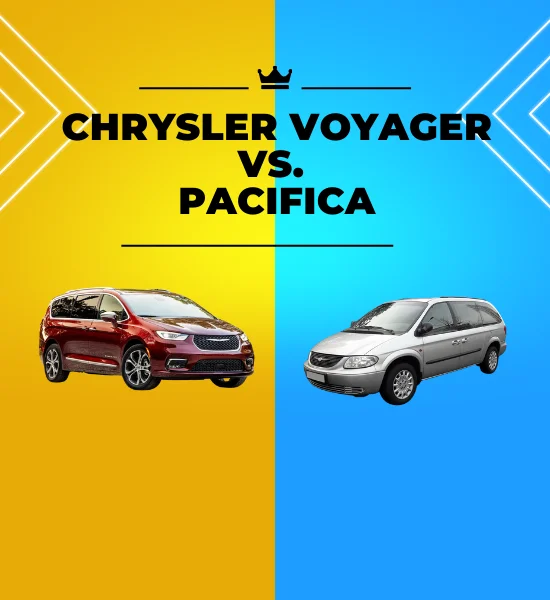
In an era where family vehicles are not just about transportation but also embody a lifestyle, the Chrysler Voyager and Pacifica emerge as fascinating contenders in the realm of minivans. Both models are engineered to cater to the diverse needs of families, yet they command attention for distinctive reasons. The choice between these two vehicles often induces a spirited debate among automotive enthusiasts and everyday drivers alike, each with specific features that can sway potential buyers in one direction or the other. What lies beneath the surface of these seemingly similar minivans? Let’s examine the intricate details that distinguish the Chrysler Voyager from the Pacifica.
1. Design and Aesthetics
The Chrysler Voyager boasts a more utilitarian approach in terms of its design, presenting a straightforward yet functional exterior. The sharp lines and pragmatic proportions offer an imposing stance that signals its purpose as a family hauler. In contrast, the Pacifica is enveloped in a cloak of modern sophistication. Its sleek silhouette, coupled with expressive front-end styling, envelops the passengers in a feeling of luxury that elevates the driving experience.
These design philosophies speak volumes about the target demographics of each vehicle. The Voyager appears to cater to the practical consumer, while the Pacifica captures the attention of those desiring a touch of elegance in their daily routines.
2. Interior Space and Comfort
Both minivans excel in providing spacious interiors, but the Pacifica raises the stakes with its premium features. The Voyager’s cabin is adequately functional, providing ample legroom and a straightforward layout that families appreciate. However, the Pacifica delights with its meticulous attention to detail, plush seating materials, and innovative storage solutions. The Stow ‘n Go seating arrangement exemplifies Chrysler’s ingenuity, allowing for versatile space management that can convert the vehicle from family transporter to a cargo carrier with ease.
3. Technology and Connectivity
In an age dominated by technology, the inclusion of advanced infotainment systems is paramount. The Pacifica leads the charge with its Uconnect infotainment system, offering an intuitive interface yielding seamless connectivity with smartphones. The available rear-seat entertainment system further captivates young passengers on long journeys, enhancing overall family cohesion on the road. In contrast, the Voyager, equipped with commendable features, lacks some of the Pacifica’s high-tech allure. While it meets the basic entertainment needs, it does not reach the technological zenith of its sibling.
4. Performance and Handling
When it comes to performance, both vehicles exhibit competent capabilities but with a different driving philosophy. The Voyager is designed primarily for functionality, offering adequate power that ably supports daily commuting and family excursions. Meanwhile, the Pacifica imbues a more dynamic driving experience. Its refined suspension system and responsive steering lend themselves to improved handling, making it a joy to navigate urban landscapes and winding roads alike.
With the addition of hybrid options in the Pacifica line-up, this model caters to eco-conscious families looking to lessen their carbon footprint without sacrificing performance.
5. Safety Features
Both vehicles are anchored in safety, demonstrating Chrysler’s commitment to delivering secure vehicles for families. The Pacifica is often lauded for its impressive array of advanced safety features, including adaptive cruise control and blind-spot monitoring, which contribute to its strong safety ratings. Conversely, while the Voyager offers essential safety features, it does not quite match the expansive offerings of its sibling. This discrepancy draws attention to the subtle yet significant priorities that may govern a buyer’s decision-making process.
6. Pricing and Value
Pricing is frequently a decisive factor in the minivan market. The Voyager is usually positioned at a lower price point, appealing to budget-conscious families eager to maximize value without compromising on core features. Its competitive pricing underlines its commitment to practicality, inviting comparisons with other budget-friendly competitors in the segment.
On the other hand, the Pacifica encapsulates a broader range of higher-end options, which comes with a higher tag. This nuance embodies a juxtaposition between immediate affordability versus the allure of luxury and advanced technology. The perceived value of the Pacifica may resonate more deeply with families seeking a long-term investment in comfort and sophistication.
7. Practicality vs. Luxury
Ultimately, the essence of the rivalry between the Chrysler Voyager and Pacifica can be distilled to a potent dichotomy: practicality versus luxury. The Voyager caters splendidly to those who see a minivan as merely a means to transport their loved ones from point A to point B, absent the bells and whistles. In stark contrast, the Pacifica appeals to those who view driving as an experience to relish, offering additional features that enhance the journey.
As such, the decision between the two inevitably invites deeper reflections on lifestyle preferences and familial aspirations.
In conclusion, both the Chrysler Voyager and Pacifica represent significant achievements in the minivan category, yet they diverge sharply in their approach to family transportation. While the Voyager is a bastion of functionality and affordability, the Pacifica stands as a symbol of modern luxury and advanced technology. The choice between these two vehicles largely hinges on individual priorities: Is practicality the foremost requirement, or does the allure of sophistication beckon? Each van brings forth a unique perspective on what a family vehicle can and should be, making them worthy of consideration for any prospective buyer. As families navigate the bustling journey of daily life, one cannot underestimate the profound impact their choice in vehicle can have on their experience.










Leave a Comment