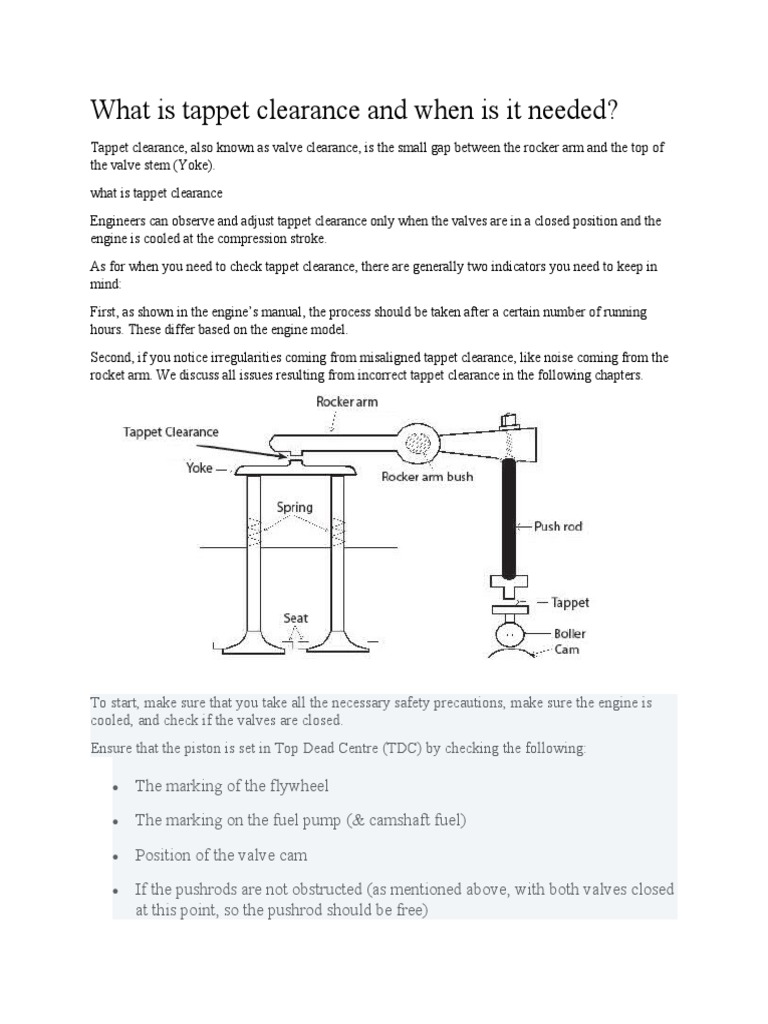
The engine of a vehicle is akin to the human heart, tirelessly pumping life into its mechanical counterpart. To maintain the rhythm and harmony within this complex system, periodic assessments of the tappet clearances are crucial. But how hot should the engine be for this nuanced endeavor? The answer lies not merely in the digits etched on a thermometer but in the very essence of optimal operating conditions.
Understanding the significance of temperature in tappet adjustment is pivotal. As the engine warms, various components expand: metal expands, oil thins, and the entire assembly settles into its working state. Just as a musician tunes their instrument to the ambient conditions of a concert hall, so too should one consider the temperature of the engine when adjusting tappet clearances.
The ideal temperature for adjusting tappet clearances sits around the operating range where the engine has achieved a balanced equilibrium, typically between 190°F to 220°F (88°C to 104°C). This zone is where the metal components have expanded sufficiently to allow the necessary slack in the valve train, ensuring that you can accurately measure and adjust the tappets to facilitate flawless performance and longevity.
Several factors influence how hot your engine should be during this process:
- Manufacturer Specifications: Always refer to the vehicle’s service manual. Manufacturers provide specific guidelines based on extensive testing and engineering insights. They detail the optimum temperature range for maintenance operations, including tappet adjustment.
- Engine Oil Quality: The type and viscosity of engine oil used can affect how well it performs at elevated temperatures. Thinner oils provide better lubrication at higher temperatures, ensuring that the tappets function smoothly and accurately when adjusted. Check for the oil’s viscosity rating and choose one that complements the engine’s design.
- Engine Type: Different engines possess varying designs and characteristics. Air-cooled engines, for instance, may necessitate different temperature considerations compared to liquid-cooled counterparts. Moreover, performance engines often perform better with tighter tolerances, requiring attention to temperature precision when tuning tappets.
As the engine warms up, ensure that it reaches the desired temperature plateau. A good practice is to take the vehicle for a brief drive, allowing the engine to circulate oil and reach its optimal thermal state. This serves a dual purpose: it precludes the awkwardness of cold adjustment and ensures that all parts have expanded correctly, paving the way for precise measurements.
Upon reaching this ideal heat, it is the moment to delve into the intricacies of adjusting tappet clearances. The process typically involves using a feeler gauge—a tool that embodies the delicate balance between rigidity and flexibility. The feeler gauge serves as the bridge between mechanical precision and human understanding, allowing for the meticulous spacing required for optimal valve operation.
Measuring should be done systematically. To begin, access the tappet covers and inspect the clearances with the engine at idle. Gently insert the feeler gauge between the tappet and the valve stem. The goal here is a snug but not overly tight fit. Should resistance be felt, it indicates the need for adjustments. Each turn of the adjusting screw alters the clearance, affecting valve timing and performance.
After adjustments are complete, returning the engine to a state of tranquility is necessary. Like a pianist smoothing the tempo of a piece after a vigorous crescendo, the engine should be allowed to idle and cool down, allowing for any residual adjustments to settle into place. It’s this delicate dance of hot and cold that underpins the entire process of tappet clearance adjustment.
Regular maintenance, including checking tappet clearances at the prescribed intervals, is non-negotiable. **A well-timed valve train can make the difference between a harmonious engine and one that struggles to find its stride.** Ignoring these subtle signals may lead to performance issues, increased wear, and ultimately, an early demise for the beloved vehicle. Just as a neglected musical instrument becomes discordant, a vehicle out of tune will falter in performance and reliability.
In conclusion, the relationship between temperature and tappet adjustment is not merely a numbers game. It’s a nuanced interplay of heat and precision, essential for ensuring that one’s vehicle operates at full potential. The optimal range of 190°F to 220°F provides a canvas on which the masterpiece of your engine’s performance can be painted. So, the next time you prepare to adjust tappet clearances, remember that like the finest symphony, an engine requires tuning in just the right conditions for everything to resonate perfectly.
Maintain your engine with the care it deserves, and it shall repay you with journeys filled with joyous adventures.








Leave a Comment