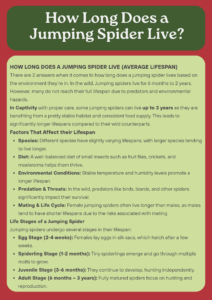
Jumping spiders are captivating creatures that belong to the family Salticidae, known for their remarkable agility and keen hunting skills. These arachnids are found all over the world, inhabiting a variety of environments. The lifespan of a jumping spider can vary widely depending on several factors, including species, environmental conditions, and whether they are in captivity or the wild. In this article, we will delve into the duration of their life cycle, explore the factors influencing their longevity, and dissect the various species to provide a comprehensive understanding of how long these fascinating creatures can live.
1. General Lifespan of Jumping Spiders
On average, a jumping spider can live anywhere from 1 to 3 years. This lifespan, while seemingly brief, can be extended under optimal conditions. Typically, females tend to outlive males, which is a common trait in many spider species. This sexual dimorphism can be attributed to the perilous nature of mating rituals, which often expose male spiders to higher risks from predation and competition.
2. Species-Specific Longevity
There are over 6,000 recognized species of jumping spiders, each with its unique characteristics and life expectancy. For instance, the ever-popular Phidippus audax, known as the bold jumping spider, often lives up to 3 years in the wild. Conversely, smaller species, such as the Plexippus paykulli, may only live for a year or so. Each species exhibits varying lifespans, influenced by genetic factors and ecological circumstances.
3. Environmental Factors Affecting Lifespan
The lifespan of a jumping spider can be profoundly affected by environmental conditions. Factors such as temperature, humidity, and food availability play critical roles in their longevity. In regions with temperate climates, jumping spiders may thrive during warmer months but face challenges in the winter. During this colder season, some species enter a state of diapause, slowing their metabolism and extending their life cycle until favorable conditions return.
In contrast, those residing in tropical climates may experience year-round activity, allowing them to live out their full potential life spans. However, predation, habitat destruction, and human interaction can drastically shorten their lives, especially in urban environments where natural habitats are continuously encroached upon.
4. Captivity vs. Wild Lifespan
Jumping spiders raised in captivity often enjoy longer lifespans than their wild counterparts. In a controlled environment, optimal conditions such as consistent temperature, humidity, and a steady supply of food can contribute to increased longevity. For instance, a female jumping spider in captivity may live up to 4 years if properly cared for. Adequate hydration and appropriate subsistence are vital for sustaining their health. The presence of environmental stressors, such as predators or drastic fluctuations in temperature, is minimized, allowing them to thrive.
5. Life Cycle Stages
The life cycle of jumping spiders consists of several distinct stages: egg, spiderling, juvenile, and adulthood. The journey begins when the female lays eggs, usually in a silken sac. Depending on the species and environmental conditions, these eggs can hatch within a week to several weeks. Once they emerge, the spiderlings are remarkably independent, often dispersing shortly after birth.
As they grow, juveniles molt multiple times, transitioning through several instars, which can last anywhere from a few weeks to several months. The transformation to adulthood marks the culmination of their life cycle, where they exhibit full coloration and mature physical features. It is at this stage that their lifespans become particularly vulnerable due to mating rituals and predation.
6. Factors Influencing Mating and Lifespan
Mating behaviors profoundly impact longevity, especially for male spiders. During courtship rituals, males perform intricate displays to attract females, which often involve unique movements and visual signals. Unfortunately, these rituals can expose them to predators. Post-mating, males may also become victims of sexual cannibalism, where females consume the males after copulation, further reducing their overall lifespan.
For females, successful mating can lead to reproductive success, adding to the cycle of life. However, the energy expended in producing eggs and the risks associated with nurturing them can also take a toll, potentially hindering their longevity.
7. Conservation and Habitat
Understanding the lifespan and life cycle of jumping spiders extends beyond mere curiosity; it also has implications for conservation. As natural habitats are increasingly compromised due to urbanization and climate change, efforts to preserve ecosystems are vital. Restoring their natural environments can significantly enhance their chances of survival and promote healthier populations, allowing them to thrive longer.
Efforts include creating urban green spaces, reducing pesticide usage, and supporting biodiversity. Every action contributes to the balance of ecosystems where jumping spiders play a crucial role as pest controllers.
In conclusion, the lifespan of jumping spiders is a complex interplay of species characteristics, environmental factors, and biological behaviors. From their emergence as tiny spiderlings to their eventual maturity, these remarkable arachnids navigate a world fraught with challenges. While they typically live for 1 to 3 years, specific conditions can extend this duration further. As we delve into the intricacies of their lives, we must also recognize our responsibility in preserving their habitats, thereby ensuring a future for these splendid hunters of the arachnid world.










Leave a Comment