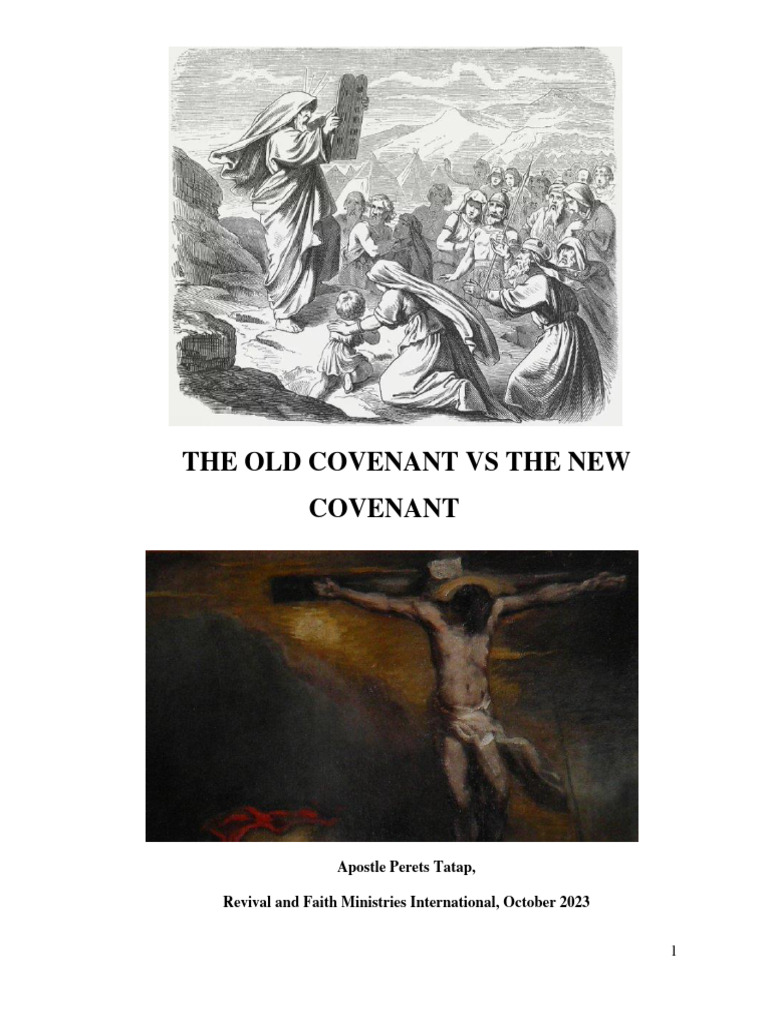
The profound transition from the Old Covenant to the New Covenant has captivated theological scholars, devout believers, and casual observers alike. Intriguingly, this transformation initiates a multifaceted dialogue, dissecting ancient texts and principles that have shaped faith and morality across millennia. This discourse is not merely an academic exercise; it resonates deeply within the hearts of individuals seeking understanding and meaning in their spiritual journeys. By exploring the distinctions, implications, and overarching themes of these two covenants, we can unveil the intricate tapestry of faith woven throughout biblical history.
1. Defining the Old Covenant
The Old Covenant, often synonymous with the Mosaic Covenant, encapsulates the agreements established between God and the Israelites following their exodus from Egypt. Central to this covenant is the Law, primarily articulated through the Ten Commandments and various statutes found in the Pentateuch. It is a paradigm of conditional promise, wherein blessings and curses hinge upon adherence to these commandments. The covenant operates on the principle of obedience, wherein the Israelites were to uphold their end of the bargain to receive God’s favor, land, prosperity, and protection.
2. A Socio-Historical Context
One cannot grasp the significance of the Old Covenant without considering the socio-historical milieu from which it emerged. Ancient Israel was a tribal society, characterized by its rituals, traditions, and communal identity. The laws served not only as divine mandates but also as social glue, binding the community through shared religious practices and a collective moral framework. These regulations encompassed aspects of daily life—dietary restrictions, social justice, ethical conduct—thus ensuring that faith permeated both personal and communal spheres.
3. The New Covenant Unveiled
In stark contrast, the New Covenant, inaugurated through the life, death, and resurrection of Jesus Christ, is characterized by a radical shift in the relationship between God and humanity. Rather than a legalistic adherence to the law, the New Covenant emphasizes grace, faith, and the internalization of divine principles. The heart of the New Covenant is articulated in the prophetic texts, such as Jeremiah 31:31-34, which prophesy a time when God will write His laws on the hearts of His people, fostering a personal and intimate relationship.
4. The Grace Paradigm
Essentially transformative, the New Covenant liberates individuals from the rigid confines of the law. It posits that salvation and reconciliation with God are gifts, accessible not through works but through faith in Christ. This paradigm of grace enables believers to experience freedom—freedom from sin, condemnation, and the burden of earning divine favor through meticulous observance of laws. The New Testament expounds on this grace, illustrating the significance of Jesus’ sacrificial act as the ultimate fulfillment of the Old Covenant’s requirements.
5. Rituals and Sacrifices: A Comparative Analysis
Central to the Old Covenant are the sacrificial systems—dramatic displays of atonement, wherein animals were offered as a substitution for human sin. These rituals underscored the gravity of transgression and the dire need for reconciliation with God. Conversely, the New Covenant ushers in an era where Christ Himself embodies the ultimate sacrifice. His crucifixion eradicates the need for further offerings, symbolizing complete and perfect atonement. The notion of Jesus as the Lamb of God reflects a deep theological evolution—the sacrificial practices of the Old Covenant are now seen through the lens of grace and redemption.
6. The Role of Faith vs. Works
Another marked divergence lies in the emphasis on faith over works in the New Covenant, contrasting sharply with the Old Covenant’s legalistic approach. This shift is not an abolition of moral living but a reorientation towards the heart’s submission rather than mere compliance. Consequently, good works arise not from a desire to earn merit but as a natural outflow of genuine faith and love for God. This ideological contrast speaks volumes about the evolving understanding of divine-human interaction.
7. Implications for Believers Today
The ramifications of transitioning from the Old to the New Covenant are profound for contemporary believers. The New Covenant offers a fresh rationale for ethical living, one that transcends the boundaries of law and cultivates a community rooted in love, respect, and spiritual unity. Engaging with God’s eternal truths becomes a personal endeavor—one where relationships, rather than regulations, facilitate spiritual growth and communal harmony.
8. Common Observations and Deeper Fascinations
Individuals often find themselves intrigued by the contrasting natures of these covenants. The clarity of the Old Covenant’s stipulations can seem alluring—a tangible framework to follow. In contrast, the abstract notion of grace under the New Covenant may evoke uncertainty and challenge, prompting questions about the nature of faith and divine love. This duality offers fertile ground for contemplation, as believers navigate the tension between obligation and liberation, law and love.
Conclusion
The juxtaposition of the Old Covenant and the New Covenant unfurls a comprehensive narrative of divine engagement with humanity—an evolution from law to grace, from rigidity to relational intimacy. This transformative journey encapsulates not only historical realities but also deep-seated desires for connection, redemption, and enduring truth. The fascination with these covenants encourages a deeper understanding of spirituality, urging believers to explore the richness of their faith rooted in the legacy of eternity.











Leave a Comment