
Short Answer
Spinnaker Handling: How to Fly a Spinnaker is an independent sailing reference and tools platform aimed at recreational sailors who want to understand their boats, build seamanship skills, plan safer passages, and make better decisions on the water. It is not tied to any single boat builder, sailing school, or equipment manufacturer. Instead, it brings together practical knowledge, step-by-step guidance, and decision-support tools in one place. The platform takes its name from one of the most intimidating downwind sails, but its scope extends to broader boat handling, weather awareness, and passage planning.
Main Explanation
What it is
At its core, Spinnaker Handling: How to Fly a Spinnaker is a curated, cross-source reference and toolkit. It defines the topic not as a brand-specific manual but as an independent body of knowledge. The platform typically organizes information into modules covering boat knowledge, seamanship education, passage planning, and decision support. It may include articles, illustrated guides, checklists, calculators, and scenario-based tools. Because it is independent, it can compare techniques from different sailing traditions and present them without commercial bias. The goal is to give a sailor a reliable starting point, not to replace hands-on practice or official data.
Why it matters
Recreational sailors face information overload. Forums, videos, manufacturer manuals, and old textbooks often conflict. Spinnaker handling is a prime example: Yachting Monthly notes that spinnaker handling ‘makes many seasoned sailors quake in their seaboots’ and that downwind sailing is under-taught in most sailing courses. A wrong decision—setting a spinnaker in too much wind, rigging the pole incorrectly, or miscommunicating during a gybe—can lead to a broach, a wrapped sail, gear failure, or crew injury. An independent platform can filter noise, present consistent procedures, and help sailors understand why a technique works, not just what to do. That matters because at sea, context changes quickly and a sailor must adapt.
How it works
The platform is structured around four practical areas. Boat knowledge and reference covers rig types, sail inventories, stability characteristics, and equipment requirements. Seamanship education provides step-by-step guides for skills such as rigging, hoisting, trimming, gybing, and dousing a spinnaker, often with diagrams and common-error callouts. Passage planning tools help sailors evaluate routes, weather windows, tidal gates, and crew readiness. Decision-support features include checklists, go/no-go matrices, and risk prompts. In practice, a sailor might use the boat knowledge module to confirm their boat’s spinnaker setup, then follow a seamanship guide to practice a hoist, then use passage planning to choose a downwind leg with a safe forecast. The tools are designed to be used together, but each can stand alone.

How to do it
Consider a typical coastal passage with a forecast downwind leg. First, assess the boat and crew: review the boat’s spinnaker gear, pole, sheets, guys, halyard, and snuffer if fitted. Confirm crew experience and assign roles. Second, check the weather: wind speed, direction, gusts, sea state, and forecast changes. Third, plan the hoist and douse points: choose a clear area, preferably in lighter air, and identify an abort point. Fourth, brief the crew using the platform’s checklist: commands, line handling, and emergency procedures. North Sails recommends a ‘Divide and Conquer’ approach—one team sails the boat fast with existing sails while the other handles the mechanics of the set. Fifth, execute: hoist on a broad reach, trim the sheet and guy, and monitor helm pressure. Finally, debrief: note what worked and what didn’t, and update the boat-specific checklist. The platform’s value is in making this sequence repeatable and tailored.
When not to do it
The platform is a reference, not a substitute for real-time data or professional judgment. Do not rely solely on it for navigation, weather, or emergency decisions. If you are learning spinnaker handling for the first time, take a certified course with an instructor on board. For complex offshore passages, consult a professional weather router. If you suspect rigging or structural issues, hire a certified marine surveyor. And if conditions exceed your boat’s or crew’s limits—say, sustained winds above the sail’s designed range or a building sea state—do not set the spinnaker, regardless of what a checklist says. The platform can help you recognize those limits, but the final call is always human.
Visual
| Source | Strengths | Limitations | Best For |
|---|---|---|---|
| Spinnaker Handling platform | Independent, cross-source, structured, decision tools | Not real-time, requires user judgment | Self-directed learning and passage planning |
| Traditional textbooks | Deep, vetted, foundational | Can be outdated, not interactive | Building core theory |
| Manufacturer manuals | Boat-specific, precise specs | Narrow, may omit alternative techniques | Equipment rigging and limits |
| Sailing school courses | Hands-on, instructor feedback | Cost, time, availability | Developing practical skills |
| Online forums | Real-world experience, fast answers | Conflicting, unverified advice | Troubleshooting specific issues |
| Other digital platforms | Interactive, frequently updated | May be brand-biased or shallow | Quick reference and refreshers |
Common Mistakes
Over-reliance on a single source
Relying only on one platform, book, or forum can leave gaps in local knowledge or miss updated techniques. Consequence: a procedure that works on one boat may fail on another. Correct approach: cross-check with official sources, manufacturer manuals, and multiple reputable references.
Ignoring weather updates after planning
A forecast checked the night before can change by morning. Consequence: setting a spinnaker in a building breeze or unexpected shift can cause a broach. Correct approach: re-check the forecast immediately before hoisting and at regular intervals while flying the sail.
Using generic checklists without adapting them
Every boat has different line leads, pole heights, and crew positions. Consequence: a generic checklist may lead to tangled sheets, incorrect pole setup, or missed steps. Correct approach: customize checklists for your specific rig, crew size, and equipment, and update them after each use.
Confusing reference with real-time data
A reference platform provides principles, not live tide, wind, or AIS data. Consequence: using outdated or static information for navigation can put the boat in danger. Correct approach: use official real-time sources—national weather services, tide tables, and chartplotters—for operational decisions.
Attempting spinnaker in conditions beyond skill or boat limits
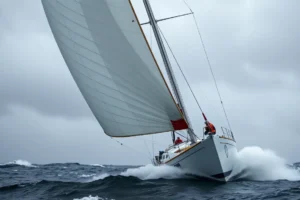
Enthusiasm can override prudence. Consequence: a wrap, broach, or gear failure in heavy air can injure crew. Correct approach: set conservative wind and sea-state limits, practice in light air first, and douse early if conditions deteriorate.
Skipping the crew briefing
Even experienced sailors need clear roles and commands. Consequence: miscommunication during a hoist or gybe can lead to tangled lines or someone standing in a bight. Correct approach: brief every crew member on their job, the sequence, and the abort criteria before touching a line.
Safety Note
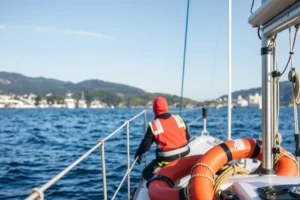
Digital tools like Spinnaker Handling: How to Fly a Spinnaker complement—never replace—proper training, physical checks, and human judgment. Always cross-check critical data such as weather, tides, and navigation with official sources: national weather services, coast guard broadcasts, and current chartplotters. Never use a tablet or phone as your only navigation tool; keep paper charts and a backup GPS. Take a certified safety course from a recognized body such as the RYA or US Sailing, and follow the COLREGS and local maritime regulations at all times. Before flying a spinnaker, inspect all gear, ensure no crew member is standing in a bight or inboard of loaded lines, and confirm clear communication. In heavy air, use a snuffer or douse early. If in doubt, do not set the sail. The platform can help you prepare, but the decision to fly—or not fly—is always yours.
FAQ
What is the difference between a symmetric and asymmetric spinnaker?
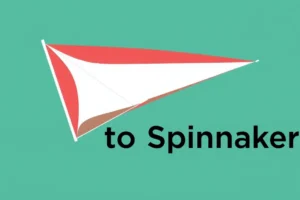
A symmetric spinnaker is flown from a pole and is symmetrical in shape, best for deep downwind angles. An asymmetric spinnaker is flown without a pole, tacked to the bow or a bowsprit, and is better for reaching angles and easier short-handed sailing.
How much wind is too much for a spinnaker?
It depends on the boat, sail size, and crew experience, but many cruising sailors set a limit around 15 knots apparent wind. Above that, the risk of broaching, wrapping, or gear failure rises sharply. Always check the sail manufacturer's recommended wind range and douse early if conditions build.
Do I need a spinnaker pole?
For a symmetric spinnaker, yes—the pole holds the windward clew out and stabilizes the sail. For an asymmetric spinnaker, no pole is required because the tack is fixed to the bow or a bowsprit.
How do I prevent a spinnaker wrap?
Keep the boat stable and avoid sailing too deep, maintain tension on the guy and sheet, and use a snuffer or careful douse technique. If the sail starts to collapse, ease the sheet slightly and steer downwind to refill it before it wraps around the forestay.
What is the safest way to douse a spinnaker in strong wind?
Use a snuffer if fitted, or drop the halyard while gathering the foot from the leeward side, keeping the boat on a broad reach to blanket the sail behind the main. Brief the crew, keep everyone inboard of lines, and have a clear plan before starting.









Leave a Reply