
Short Answer
An Emergency Position Indicating Radio Beacon (EPIRB) is a satellite-linked distress transmitter designed to alert search and rescue (SAR) authorities to your location when all other means of communication have failed. Unlike a VHF radio or mobile phone, an EPIRB works offshore, beyond coastal coverage, and transmits a digitally coded 406 MHz signal through the Cospas-Sarsat satellite network. This guide explains what an EPIRB is, how it works, when to activate it, and how to avoid the mistakes that can turn a life-saving tool into a false alarm or a missed rescue.
Main Explanation
What it is
An EPIRB is a battery-powered radio beacon that, when activated, sends a distress signal on 406 MHz to satellites. The signal includes a unique identification number linked to your registration, and most modern units also embed GNSS coordinates. A secondary 121.5 MHz homing signal helps rescue aircraft and vessels pinpoint the beacon once they are close. EPIRBs are not tied to any specific boat brand, sailing school, or equipment manufacturer; they are standardized under international GMDSS rules and national regulations. Two main categories exist: Category I beacons are housed in a float-free bracket that automatically releases and activates if the vessel sinks; Category II beacons are manually activated, though some are also water-activated. The 121.5/243 MHz satellite alerting was discontinued in 2009, so only 406 MHz beacons are now processed by Cospas-Sarsat.
Why it matters
At sea, VHF range is limited, mobile phones fail offshore, and flares are only visible if someone is looking. An EPIRB provides a direct link to SAR authorities anywhere in the world. The stakes are high: a delayed or missed distress alert can mean the difference between rescue and tragedy. Recreational sailors face information overload from forums, outdated manuals, and conflicting advice. An EPIRB cuts through that noise by providing a single, internationally recognized distress signal. However, it is not a substitute for seamanship or other communication tools; it is the last-resort alert when you are in grave and imminent danger and cannot summon help by other means.
How it works
An EPIRB consists of a waterproof housing, a long-life lithium battery, a 406 MHz transmitter, a 121.5 MHz homing transmitter, a strobe light, and an activation switch. When activated, it transmits a burst signal every 50 seconds. The Cospas-Sarsat satellite system detects the signal, calculates the beacon’s position using Doppler shift or embedded GNSS data, and relays the alert to a ground station, then to a Rescue Coordination Centre (RCC). The RCC uses your registration details to contact emergency contacts and task SAR assets. Some modern EPIRBs also include AIS, which broadcasts a local alert to nearby AIS-equipped vessels, speeding up response in busy waters. Registration is mandatory and free; it links the beacon’s unique ID to your vessel and contact information. Regular self-tests confirm battery and transmitter status without sending a distress alert.

How to do it
For a typical coastal passage, follow these steps. First, verify your EPIRB is registered and the registration is current. Check the battery expiry date and hydrostatic release date if Category I. Mount the beacon in its bracket where it is accessible but protected from accidental knocks. Perform the manufacturer’s self-test before departure. Know your activation method: for Category I, the beacon should release and activate automatically if submerged; for Category II, remove from bracket and switch to ON, or deploy in water if water-activated. In an emergency, exhaust other means first: VHF DSC, mayday call, flares. If the situation is life-threatening and you must abandon ship, activate the EPIRB, keep it upright with the antenna vertical, and leave it on. Do not turn it off once activated, even if you think help has arrived; let SAR authorities instruct you. If you accidentally activate it, do not switch it off—contact the nearest coast guard or RCC immediately and report the false alert.
When not to do it
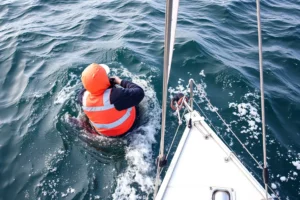
Do not use an EPIRB for routine communication, a non-emergency breakdown, or a man overboard. A PLB or AIS MOB device is better for a person in the water because it is worn on the body and provides faster local alerting. Do not rely on an EPIRB as your primary means of summoning help when VHF or a satellite phone is available and working. Do not use an EPIRB to test the system; use the self-test function only. Professional training, a human weather router, or a certified marine surveyor is more appropriate for learning advanced seamanship, planning a complex ocean passage, or assessing a vessel’s structural integrity. An EPIRB is a distress beacon, not a navigation or communication tool.
Visual
| Source | Strengths | Limitations | Best For |
|---|---|---|---|
| EPIRB (406 MHz) | Global satellite coverage, float-free option, long battery, registered ID | Last-resort only, not for MOB, requires registration, false alerts costly | Vessel abandonment, offshore emergencies |
| VHF DSC radio | Immediate local response, voice communication, DSC distress button | Line-of-sight range only, no global coverage | Coastal distress, routine communication |
| PLB | Personal, wearable, global satellite alert, smaller | Shorter battery, no float-free, must be manually activated | Man overboard, crew overboard, personal safety |
| AIS MOB device | Local alert to nearby AIS-equipped vessels, fast response | No satellite link, limited range, requires AIS receiver | Man overboard in busy waters |
| Flares | Visual, no electronics, inexpensive | Short duration, require someone to see, weather-dependent | Visual signaling when rescuers are near |
| Satellite messenger | Two-way text, tracking, global coverage | Subscription cost, not a dedicated distress beacon, may lack GMDSS recognition | Routine check-ins, non-emergency communication |
Common Mistakes
Not registering or updating registration
Consequence: SAR cannot identify your vessel or contact your emergency contacts, delaying response. Correct approach: Register with your national authority and update details whenever they change.
Testing incorrectly or too often
Consequence: Accidental distress alert, wasting SAR resources and possible fines. Correct approach: Use the self-test function only as described in the manual; never activate the distress signal for testing.
Storing EPIRB in an inaccessible locker or leaving it in bracket when abandoning ship
Consequence: You cannot reach it in an emergency, or it sinks with the vessel. Correct approach: Mount it in an accessible location; if abandoning, remove and activate manually.
Turning off EPIRB after activation or not keeping antenna vertical
Consequence: Signal lost or weak, rescuers cannot home in. Correct approach: Leave it on, keep it upright, and keep the antenna clear.
Relying on EPIRB as first resort instead of VHF or flares
Consequence: Unnecessary SAR launch and delay in local assistance. Correct approach: Use VHF DSC and voice mayday first if possible; EPIRB is the last resort.
Ignoring battery expiry or hydrostatic release service
Consequence: Beacon may not work when needed. Correct approach: Check dates and service the unit according to the manufacturer’s schedule.
Safety Note
An EPIRB is a critical last-resort tool, but it must fit into a broader safety framework. Always cross-check weather, tides, and navigation data with official sources such as national weather services and hydrographic offices. Never use a tablet or phone as your only navigation tool; carry paper charts and a handheld VHF as backup. Take a certified safety and sea survival course, and practice abandon-ship and distress procedures with your crew. Follow the International Regulations for Preventing Collisions at Sea (COLREGS) and local maritime regulations at all times. Before every passage, physically inspect your EPIRB, test it according to the manufacturer’s instructions, and confirm your registration is current. If you accidentally activate an EPIRB, do not turn it off—call the nearest coast guard or rescue coordination centre immediately and report the false alert. Digital tools and beacons complement, but never replace, proper training, physical checks, and human judgment.
FAQ
How do I register an EPIRB?
Register with your national authority, such as NOAA in the US, AMSA in Australia, or the MCA in the UK. Registration is free and links the beacon's unique ID to your vessel and emergency contact details. Update it whenever your contact information or vessel changes.
What is the difference between an EPIRB and a PLB?
An EPIRB is designed for vessel use, often mounted in a float-free bracket, with a larger battery and automatic activation. A PLB is smaller, worn on the person, and manually activated. Both use the 406 MHz satellite system, but a PLB is better for man overboard situations.
How often should I test my EPIRB?
Follow the manufacturer's instructions. Most EPIRBs have a self-test function that checks battery and transmitter without sending a distress alert. Perform the self-test monthly or before each passage, and have the unit serviced annually or as specified.
What should I do if I accidentally activate my EPIRB?
Do not turn it off. Contact the nearest coast guard or rescue coordination centre immediately and report the false alert. Turning it off without notifying authorities can lead to an unnecessary search and possible penalties.
Can I use an EPIRB for a man overboard?
An EPIRB is not ideal for man overboard because it is vessel-mounted and may not be immediately accessible. Use a PLB or AIS MOB device worn by the person, which provides faster and more localized alerting.






















Leave a Reply