
Short Answer
Heaving to is a fundamental heavy-weather sailing maneuver that allows a sailboat to slow to a controlled near-stop while keeping sails hoisted. By balancing a backwinded headsail against an eased mainsail and the rudder, the boat settles into a stable, fore-reaching attitude that reduces strain and gives the crew time to rest, make repairs, or wait for conditions to improve. This article explains the technique, its practical application, common mistakes, and safety considerations for recreational sailors.
Main Explanation
What it is
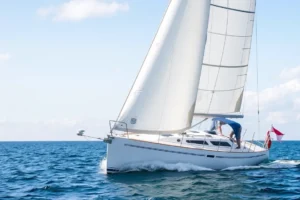
Heaving to is a sailing maneuver that brings a boat to a near standstill without dropping sails or starting the engine. The boat is set up so that the headsail and mainsail work in opposition: the headsail is backwinded (pushed against the wind) while the mainsail is eased, and the rudder is turned to windward. The result is a balanced state in which the boat fore-reaches slowly, drifting to leeward at a fraction of normal speed. It is not tied to any specific boat brand, sailing school, or equipment manufacturer; it is a universal seamanship skill described in sailing literature and taught by recognized training organizations. According to Practical Boat Owner, some boats heave to better with the main eased toward the quarter, and the maneuver is often underused despite being an essential skill.
Why it matters
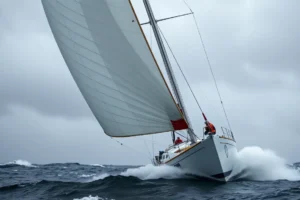
Modern sailors face information overload, conflicting advice from forums, and outdated resources that can make heavy-weather decisions confusing. Heaving to provides a reliable, repeatable technique that has been proven in severe conditions. During the 1979 Fastnet Race, 26 sailors hove to in a storm in which 18 people died; none of those boats suffered serious damage, rolled, or capsized, according to American Sailing. The maneuver matters because it gives a crew a way to pause, assess, and reduce risk without abandoning the boat to the mercy of waves. It is also useful for delaying a harbor entrance, fixing gear, or simply having lunch at sea.
How it works
The physics of heaving to relies on opposing forces. When the headsail is backwinded, it pushes the bow away from the wind (to leeward). The mainsail, eased well out, and the rudder turned to windward push the bow back toward the wind. These forces reach equilibrium, and the boat settles into a stable attitude, fore-reaching slowly and making leeway. The exact balance varies by hull design, keel type, and sail plan. NauticEd describes the steps as tacking without releasing the headsail, then turning the helm to windward once the boat has nearly stopped. Practical Boat Owner notes that some boats need the main eased toward the quarter to find balance. The boat does not stop completely; it drifts downwind at perhaps 1–2 knots, creating a slick to windward that can reduce breaking wave impact.

How to do it
For a typical coastal passage or heavy-weather scenario, follow these steps:
- Reduce sail to a manageable size for the conditions—usually a deeply reefed main and a small headsail or storm jib.
- From a close-hauled course, tack the boat slowly, but do not release the headsail sheet. Let the headsail backwind against the mast.
- Ease the mainsail out until it luffs or nearly luffs, and secure the mainsheet so the boom cannot crash across.
- Turn the helm to windward (toward the backwinded headsail) and lash or lock it in place.
- Adjust the headsail sheet, mainsheet, and helm until the boat settles into a steady fore-reaching attitude with minimal speed and heel.
- Monitor the boat’s heading, drift, and the sea state. Make small adjustments as wind shifts or builds.
Practice in moderate conditions before relying on the maneuver in a storm. Different boats may require different settings; a fin-keel racer will behave differently from a full-keel cruiser.
When not to do it
Heaving to is not a universal solution. Do not rely on it in confined waters, near a lee shore, or in busy traffic where the boat’s slow drift could create a collision risk. It is not a substitute for professional training, a certified weather router, or a marine surveyor when those are needed. In extreme breaking seas, some boats may be better off running off or lying ahull, depending on design and sea state. Always use judgment and be prepared to change tactics. If you are unsure of your boat’s behavior, seek instruction from a qualified sailing school or an experienced skipper.
Visual
The following step sequence summarizes the heaving-to process at a glance:
- Prepare: reef sails for conditions and ensure sea room.
- Tack without releasing the headsail sheet.
- Let the headsail backwind against the mast.
- Ease the mainsail until it luffs or nearly luffs.
- Turn the helm to windward and secure it.
- Fine-tune sheets and helm until the boat fore-reaches slowly and steadily.
Common Mistakes
Releasing the headsail during the tack
If you release the headsail as in a normal tack, the sail will not backwind, and the boat will simply continue sailing on the new tack. Consequence: no heave-to balance, and the boat may accelerate. Correct approach: keep the headsail sheeted on the old side until the sail is firmly backwinded.
Not easing the mainsail enough
A mainsail that is trimmed in too far will drive the boat forward and increase heel. Consequence: the boat may not slow down and could round up or tack unexpectedly. Correct approach: ease the main until it luffs or nearly luffs, then adjust to find the balance point.
Oversteering or lashing the helm too hard
Forcing the rudder too far to windward can stall the rudder or cause the boat to tack back through the wind. Consequence: loss of control and possible accidental gybe. Correct approach: turn the helm gradually and secure it only when the boat settles; use small adjustments.
Using too much sail in strong winds
Heaving to with full sail in heavy weather can overpower the boat and make the balance unstable. Consequence: excessive heel, risk of knockdown, and high loads on rigging. Correct approach: reef deeply before heaving to; use a storm jib if necessary.
Assuming all boats heave to the same way
Hull shape, keel type, and rig configuration affect how a boat balances. Consequence: a setting that works on one boat may not work on another, leading to frustration or unsafe conditions. Correct approach: experiment in moderate weather and note your boat’s preferred settings.
Ignoring drift and leeway
A hove-to boat is not stationary; it drifts downwind and makes leeway. Consequence: you may end up closer to a lee shore or shipping lane than expected. Correct approach: monitor position regularly, allow ample sea room, and adjust course or tactic if drift becomes dangerous.
Safety Note
Heaving to is a valuable tool, but it must fit within a broader safety framework. Digital references, apps, and online articles—including this one—complement, never replace, proper training, physical checks, and human judgment. Always cross-check critical data such as weather forecasts, tides, and navigation with official sources like national weather services and hydrographic offices. Never use a tablet or phone as your only navigation tool; keep paper charts and a handheld compass as backups. Take a certified safety and sea survival course, and practice heaving to in controlled conditions before needing it in a storm. Maintain a proper lookout at all times, even when hove to, and follow the International Regulations for Preventing Collisions at Sea (COLREGS) and local maritime regulations. If conditions deteriorate beyond your experience or your boat’s capabilities, do not hesitate to call for assistance or alter your plan.
FAQ
What is the difference between heaving to and lying ahull?
Heaving to uses a backed headsail and eased main with rudder to maintain a controlled fore-reaching attitude. Lying ahull means dropping all sails and letting the boat drift beam-on to the seas, which can be dangerous in breaking waves because the boat may roll heavily.
Can I heave to in any sailboat?
Most monohull sailboats can heave to, but the exact settings vary with hull shape, keel type, and rig. Fin-keel boats with high-aspect rigs may require more careful adjustment and may fore-reach faster. Catamarans and some modern planing hulls may not heave to as effectively.
How much sea room do I need to heave to?
A hove-to boat drifts downwind and makes leeway, often at 1–2 knots or more in strong winds. Allow at least several miles of clear water to leeward, and monitor your position regularly. In coastal waters, ensure you are well clear of shipping lanes and lee shores.
Is heaving to safe in a storm?
Heaving to is a proven heavy-weather tactic, but it is not automatically safe in all storms. In extreme breaking seas, some boats may be better off running off or using a sea anchor. The decision depends on boat design, sea state, and crew experience. Always be prepared to change tactics.








Leave a Reply