
Short Answer
A sea anchor is one of the most misunderstood pieces of heavy-weather gear on a cruising boat. Deployed from the bow, it holds the vessel’s head to wind and sea, slows drift, and can create a protective slick to windward. This guide explains how to use a sea anchor as part of a broader heavy-weather strategy, when it is the right tool, and when other tactics such as heaving-to or running with a drogue are safer.
Main Explanation
What it is
A sea anchor is a parachute-like device streamed from the bow on a long nylon rode. Unlike a conventional anchor that digs into the seabed, a sea anchor works in open water by creating hydrodynamic drag. Its primary purpose is to keep the bow pointed into oncoming wind and waves, reduce leeward drift, and hold the boat in a more stable attitude. In heavy weather, this can prevent a boat from lying beam-on to breaking seas, which is one of the most dangerous positions for a monohull. The tactic is distinct from a drogue, which is deployed from the stern to slow a boat that is running downwind. According to Cruising World, sea anchors and drogues are often confused, but they serve opposite ends of the boat and opposite tactical goals [2].
Heavy-weather tactics are not one-size-fits-all. The right choice depends on boat design, sea state, wind strength, crew endurance, and the stage of the weather system. A sea anchor is one option among several, including heaving-to, forereaching, motorsailing, and running off with a drogue [1][3].
Why it matters
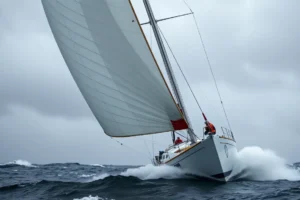
In severe conditions, a boat can be rolled, pitchpoled, or pooped by a breaking wave. A sea anchor can reduce these risks by keeping the bow into the seas and slowing the boat’s drift. It also creates a “slick” to windward—a patch of disturbed water that can reduce the energy of breaking waves before they reach the hull [3]. For a tired crew, a properly set sea anchor can provide a period of relative stability, allowing rest and decision-making.

However, sailors face conflicting advice from forums, outdated books, and manufacturer marketing. A reliable, independent reference is essential because the wrong tactic in the wrong conditions can be worse than no tactic at all. The stakes are high: gear failure, injury, or loss of the vessel. Understanding the principles behind each tactic—not just memorizing steps—is what separates safe passages from emergencies [1].
How it works
A parachute sea anchor consists of a canopy, shroud lines, a swivel, and a long rode. When deployed, the canopy opens underwater and resists forward motion. The boat lies bow to the wind, drifting slowly downwind. The rode—typically nylon for elasticity—absorbs shock loads as the boat surges. A trip line attached to the apex of the canopy and led to a buoy allows retrieval by pulling the canopy inside-out, rather than winching against full load [4].
Key components and setup:
- Canopy size: matched to boat displacement and windage; too small provides insufficient drag, too large can generate dangerous loads.
- Rode: long nylon line, often 10–15 times the boat’s waterline length, to provide shock absorption and keep the canopy below the surface.
- Bridle: distributes load to two strong points (e.g., bow cleats or mooring bitts) to avoid point-loading a single fitting.
- Trip line: a lighter line from the canopy apex to a floating buoy, used to collapse the canopy for retrieval.
- Chafe protection: critical where the rode passes through chocks or over the bow roller.
When set, the boat should fore-reach slowly or lie nearly stationary, with the bow about 40–60 degrees off the wind, depending on boat design. The slick to windward can be visible as a smooth area of reduced wave breaking [3].
How to do it
Deploying a sea anchor is not a last-minute act; it requires preparation and practice. A typical sequence for a coastal or offshore passage:
- Prepare before departure: Inspect the sea anchor, rode, swivel, trip line, and chafe gear. Ensure the bridle is ready and attachment points are strong. Brief the crew on deployment and retrieval.
- Choose the moment: Deploy before conditions become extreme. If the forecast calls for sustained winds above 35–40 knots and building seas, consider setting the sea anchor while the crew is still fresh and the deck is manageable.
- Set up on deck: Attach the bridle to the bow cleats or bitts. Lead the rode through a bow chock or roller with chafe protection. Flake the rode and canopy on deck so it can run out without tangling.
- Deploy from the bow: Stream the canopy and rode over the bow, paying out line gradually. Do not throw the whole bundle at once; let the canopy open and fill. Pay out the full scope, then secure the rode to the bridle.
- Set the trip line: Attach the trip line to the canopy apex and stream it with a buoy. This line should be long enough to reach the surface but not so long that it wraps the rode.
- Monitor and adjust: Check the boat’s heading, drift rate, and rode tension regularly. Adjust the helm or bridle if the boat lies too far off the wind. Watch for chafe and signs of the canopy collapsing.
- Retrieve safely: When conditions moderate, motor slowly toward the buoy, pick up the trip line, and pull the canopy inside-out. Do not try to winch the sea anchor in against full load. Stow the gear carefully for the next use.
This sequence is a general guide; exact steps vary by boat and equipment. Always follow the manufacturer’s instructions for your specific sea anchor [4].
When not to do it
A sea anchor is not always the right tool. Avoid relying on it in the following situations:
- Near a lee shore or in shallow water: The boat will still drift downwind; if there is not enough sea room, a sea anchor will not prevent grounding.
- In heavy shipping lanes or congested waters: A boat lying to a sea anchor has limited maneuverability and may not be able to avoid collision.
- With an untrained or exhausted crew: Deployment and retrieval require deck work in rough conditions. If the crew cannot execute the procedure safely, another tactic may be better.
- When the boat is better suited to another tactic: Modern fin-keel boats with large rudders may heave-to well or run with a drogue more comfortably than lying to a sea anchor. The Pardey-style hove-to position works on many full-keel and cutter-rigged boats, but not all [3].
- As a substitute for professional training: Reading about sea anchors is not the same as practicing with an instructor. A certified heavy-weather sailing course provides hands-on experience that no article can replace.
Visual
The table below compares a sea anchor with other common heavy-weather tactics to help you choose the right tool for your boat and conditions.
| Tactic | Strengths | Limitations | Best For |
|---|---|---|---|
| Sea anchor (bow) | Holds bow to wind, slows drift, creates slick, reduces rolling | High loads on gear, difficult retrieval, limited maneuverability, needs sea room | Open ocean, long-duration storms, full-keel or heavy-displacement boats |
| Drogue (stern) | Slows boat while running, improves steering control, reduces risk of pitchpoling | Boat still takes waves from astern, requires active steering, can be towed under | Fin-keel boats, downwind storm running, when boat steers well |
| Heaving-to | Simple, no special gear, boat lies quietly, crew can rest | Not effective in very high winds or breaking seas, boat may fore-reach too fast | 35–50 knots, organized seas, cutter-rigged or full-keel boats |
| Running off | Maintains speed and maneuverability, avoids beam-on seas | Risk of broach or pitchpole, requires skilled helmsman, can exhaust crew | When sea room is ample and boat surfs well |
Common Mistakes
Confusing a sea anchor with a drogue
Many sailors use the terms interchangeably, but they are opposite tools. A sea anchor is deployed from the bow to hold the boat head-to-wind; a drogue is deployed from the stern to slow the boat while running. Using the wrong one can put the boat beam-on to breaking seas. Always confirm which device you have and where it is designed to be deployed [2].
Deploying too late
Waiting until conditions are extreme makes deck work dangerous and increases the chance of tangles or gear failure. Deploy the sea anchor while the crew is still capable and the boat is manageable. A good rule is to set it before you think you need it.
Using undersized or weak gear
A sea anchor that is too small will not hold the bow into the seas; one that is too large can generate loads that exceed deck fittings. Match the canopy size to your boat’s displacement and windage, and use a rode and bridle rated well above expected loads. Inspect all components for chafe and UV damage before each passage.
Skipping the trip line
Without a trip line, retrieving a sea anchor under load can be nearly impossible and may require cutting the rode. Always rig a trip line to the canopy apex and stream it with a buoy. Practice retrieval in moderate conditions so the crew knows the procedure.
Relying on the sea anchor as a substitute for seamanship
A sea anchor is one tool in a larger strategy. It does not replace weather routing, sail reduction, crew rest, or good judgment. Some boats heave-to or run with a drogue more safely than lying to a sea anchor. Evaluate all options based on your boat, crew, and conditions [1][3].
Ignoring chafe and load points
The rode can saw through a chock or roller in hours. Use dedicated chafe protection, inspect the rode regularly, and distribute the load through a bridle to two strong points. A single bow cleat may not be designed for the sustained loads of a sea anchor in a storm.
Safety Note
A sea anchor is a valuable piece of safety equipment, but it is not a substitute for training, preparation, or sound judgment. Before relying on any heavy-weather tactic, take a certified safety and seamanship course that includes practical drills. Always cross-check weather forecasts and navigational data with official sources such as national weather services and coast guard broadcasts. Keep paper charts and a handheld VHF as backups; never use a phone or tablet as your only navigation tool. Follow the International Regulations for Preventing Collisions at Sea (COLREGS) and local maritime regulations at all times. Inspect your sea anchor, rode, bridle, and trip line before every passage, and replace any component that shows wear. Remember that digital references and articles—including this one—complement, but never replace, hands-on experience and human judgment at sea.
FAQ
What is the difference between a sea anchor and a drogue?
A sea anchor is deployed from the bow to hold the boat's head to wind and reduce drift. A drogue is deployed from the stern to slow the boat while running downwind and improve steering control. They serve opposite tactical goals and should not be confused.
How do I know what size sea anchor to use for my boat?
Sea anchor size is matched to boat displacement and windage, not length alone. Check the manufacturer's sizing chart for your specific model. A canopy that is too small will not hold the bow into the seas; one that is too large can generate dangerous loads on deck fittings.
Can I use a sea anchor on a fin-keel boat?
Yes, but fin-keel boats with large rudders may heave-to or run with a drogue more comfortably than lying to a sea anchor. The best tactic depends on the boat's design, sea state, and crew experience. Test your boat's behavior in moderate conditions before relying on any heavy-weather tactic.
How do I retrieve a sea anchor in rough conditions?
Use the trip line attached to the canopy apex. Motor slowly toward the trip line buoy, pick it up, and pull the canopy inside-out. Do not try to winch the sea anchor in against full load, as this can damage gear or injure crew. Practice retrieval in calm conditions first.
Is a sea anchor better than heaving-to?
Not always. Heaving-to is simpler and requires no special gear, but it may not be effective in very high winds or breaking seas. A sea anchor provides more positive bow-to-wind control but involves higher loads and more complex gear. The right choice depends on your boat, crew, and conditions.

Leave a Reply