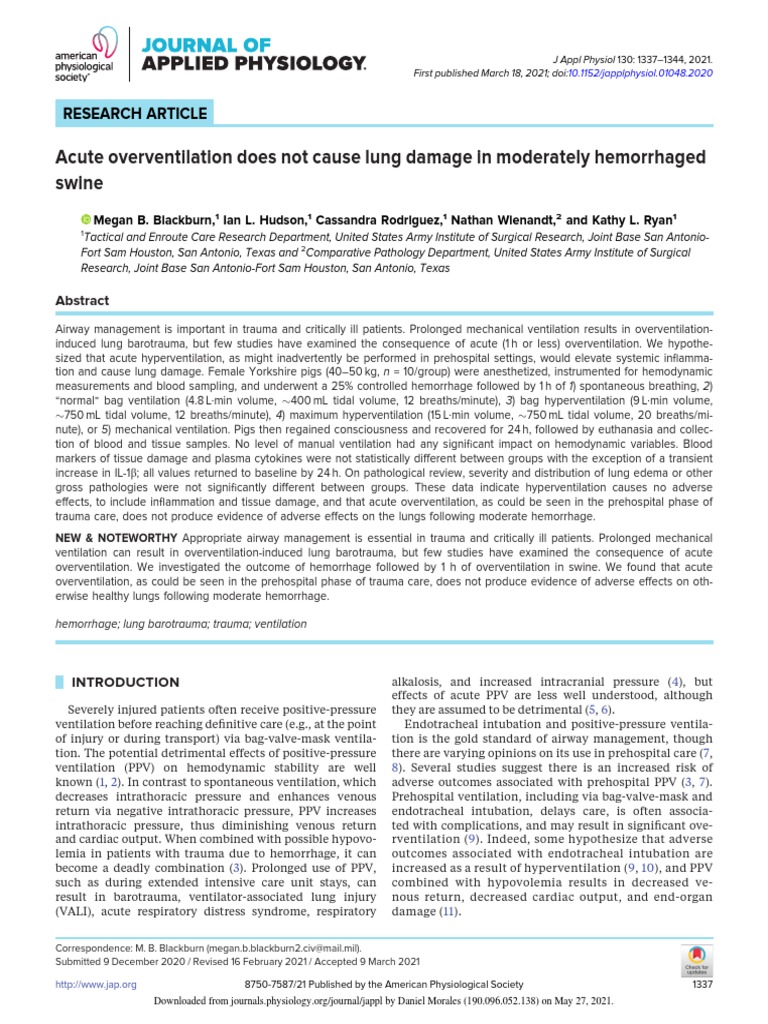
In the realm of respiratory physiology, the topic of excessive ventilation has garnered attention for its intricate implications on human health and well-being. While the act of breathing is often taken for granted, a closer examination reveals that overventilation—characterized by a heightened respiratory rate and depth—can have profound effects on the body and mind. This article delves into the complexities surrounding excessive ventilation, unraveling its physiological consequences, psychological ramifications, and broader cultural significance.
At its core, excessive ventilation refers to a state in which the body expels carbon dioxide (CO2) at a rate that surpasses the metabolic demands of its tissues. This phenomenon is frequently observed in scenarios of hyperventilation, where an individual inhales deeply and rapidly, often triggered by stress, anxiety, or an underlying health condition. One of the most immediate effects of this overbreathing is a reduction in blood CO2 levels, a condition known as hypocapnia. The ramifications of hypocapnia ripple throughout the body, engendering a cascade of physiological responses.
Primarily, hypocapnia leads to vasoconstriction—narrowing of blood vessels—resulting in diminished cerebral blood flow. The brain, which is highly sensitive to alterations in CO2 levels, can experience a range of troubling symptoms including dizziness, lightheadedness, and even syncope (fainting). Individuals may not immediately correlate these symptoms with their breathing patterns, thus perpetuating a cycle of unease and further hyperventilation. The interplay between overbreathing and reduced blood flow underscores the delicate balance the body maintains in its respiratory and circulatory systems.
Moreover, excessive ventilation can manifest physical symptoms that extend beyond the brain. One particularly alarming effect is the onset of muscular tetany, a condition characterized by involuntary muscle contractions. This occurs when calcium levels in the blood are disrupted due to altered pH—a direct result of reduced CO2. Individuals may find themselves grappling with spasms in their hands and feet, leading to tingling sensations often referred to as paresthesia. Such experiences can be bewildering, as the connection between breath and bodily sensations may not be immediately evident.
Compounding these physiological effects is the psychological dimension of excessive ventilation. Notably, individuals experiencing panic attacks often exhibit hyperventilation as a response to acute anxiety. The rapid inhalation creates a feedback loop: the person feels anxious, breathes more quickly, and then experiences a wave of distress from the physical sensations induced by hypocapnia. This underscores an important observation: the interplay between mental state and respiratory patterns can significantly impact one’s overall sense of well-being. As such, understanding the nuances of our breathing habits becomes paramount in addressing mental health issues.
Through the lens of psychology, excessive ventilation can be both a symptom and a cause of anxiety disorders. Individuals who frequently engage in shallow breathing may inadvertently condition their bodies to respond to stress in a hyperventilatory manner. This automatic response can lead to the development of maladaptive breathing patterns, ultimately entrenching the individual in a cycle that fortifies their anxiety. The mind-body connection is aptly illustrated here, revealing how conscious awareness of breath can be a powerful tool for managing emotional states.
Furthermore, cultural perceptions of breathing also illuminate society’s fascination with excessive ventilation. In various wellness traditions, controlled breathing is heralded as a mechanism for achieving tranquility and heightened awareness. However, this contrasts sharply with the phenomenon of overventilation, which can evoke panic and discomfort. As societies increasingly prioritize mindfulness practices, the duality of breath—its capacity to both soothe and agitate—captures a complex narrative of human experience. This paradox raises deeper questions about our innate responses to stress and our coping mechanisms amidst the chaos of modern life.
Addressing excessive ventilation requires a multifaceted approach. First and foremost, fostering awareness of one’s breathing patterns is crucial. Simple techniques, such as diaphragmatic breathing, can ameliorate hyperventilation by encouraging deeper, slower breaths. Engaging in mindfulness meditation can also cultivate a heightened consciousness of the breath, helping to unearth underlying stressors and facilitating emotional regulation.
Additionally, it is important to recognize when to seek professional help. Chronic hyperventilation may necessitate an assessment from healthcare providers, especially if it is associated with anxiety disorders or other underlying health conditions. Therapists specializing in cognitive behavioral techniques can effectively ameliorate the psychological aspects of overbreathing, guiding individuals through their anxiety and enabling them to reclaim control over their respiratory patterns.
In conclusion, the effects of excessive ventilation extend well beyond the respiratory system, impacting both physiological and psychological realms. The intricate relationship between breath, anxiety, and bodily sensations unveils the profound complexities of human existence. As we deepen our understanding of the mechanics of breathing, we also unravel layers of meaning that resonate with our daily experiences. Attending to our breath—whether through conscious practice or therapeutic intervention—offers a pathway to greater self-awareness and holistic well-being.









Leave a Comment