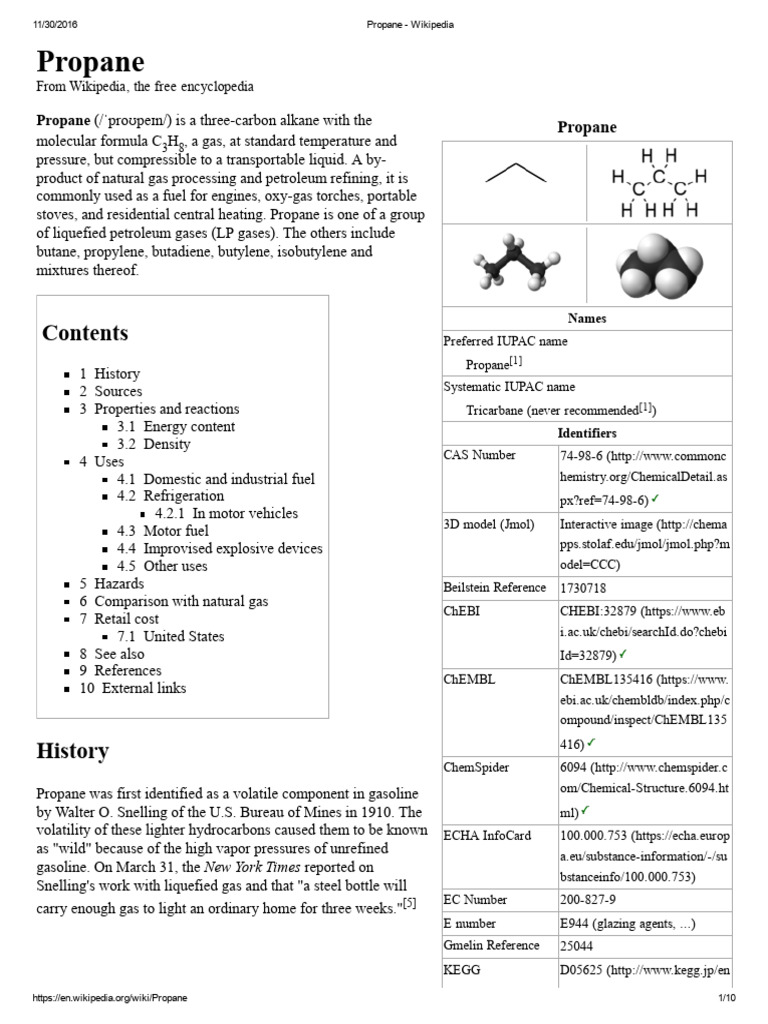
In a world fervently seeking sustainable energy sources, understanding the origins of everyday fuels can foster a profound appreciation for the resources we often take for granted. Propane, a commonly used fuel, beckons us to unravel its secrets—from its formation deep within the Earth to its multifaceted applications in our daily lives. This journey through the enigmatic world of propane promises a shift in perspective and piques curiosity regarding its significance in various facets of our existence.
The Geological Origins of Propane
To comprehend the genesis of propane, one must first delve into the intricate processes occurring beneath the Earth’s surface. Propane is classified as a hydrocarbon, a compound primarily composed of hydrogen and carbon atoms. As we venture deep into the Earth’s crust, we encounter the remnants of ancient marine organisms, which, over millions of years, have undergone intense heat and pressure to create hydrocarbon reservoirs. This process, known as “thermal cracking,” is responsible for transforming organic matter into fossil fuels, including propane.
Remarkably, propane is not found in isolation; rather, it exists alongside other hydrocarbons, such as natural gas and crude oil. During extraction, a careful separation process is employed to isolate propane, predominantly derived from two sources: natural gas processing and petroleum refining. This association with both types of fossil fuels reflects propane’s dual nature, a versatile energy source that can be harvested in multiple ways.
The Extraction Process
Once the geological origins are understood, one must consider how propane is methodically extracted for consumption. The extraction process begins at natural gas fields or refineries, where the gas is collected and transported to processing facilities. At these facilities, the raw natural gas is subjected to a series of separation methods, utilizing sophisticated technology to isolate various hydrocarbons. The process often involves cooling the gas to liquefy it, allowing for easier handling and transportation.
Through a combination of compression and cooling, propane is separated from other gaseous hydrocarbons, such as methane and butane. This refined propane is then subjected to purification processes to eliminate contaminants, ensuring that it meets regulatory standards for commercial use. Once purified, propane can be stored under pressure in liquid form, ready for distribution to a myriad of applications.
Propane’s Versatile Applications
Having unraveled the origins and extraction of propane, one may wonder how this odorless, colorless gas becomes indispensable in various realms of our lives. Propane is renowned for its versatility, easily adapting to diverse applications. It serves as a crucial energy source for residential heating, powering furnaces, water heaters, and stoves. In colder climates, propane often emerges as the preferred choice for home heating due to its efficiency and rapid heat output.
Beyond residential applications, propane plays a pivotal role in commercial and industrial sectors. Restaurants utilize propane gas for cooking, while manufacturers rely on it for powering machinery and equipment. Additionally, agricultural operations harness propane for grain drying, crop heating, and fueling tractors. This broad spectrum of utilities illustrates how integral propane is to modern society, transcending boundaries from homes to industries.
Environmental Considerations
With an increasing emphasis on sustainability, the environmental impact of propane begs examination. When combusted, propane emits significantly fewer greenhouse gases compared to coal and oil, making it a cleaner fossil fuel alternative. While it remains a non-renewable resource, it produces less carbon dioxide, sulfur dioxide, and particulate matter upon combustion, making it a more environmentally friendly option for both residential and commercial applications.
Yet, it is crucial to approach propane use with mindfulness. Despite its cleaner burning properties, excessive reliance on fossil fuels, including propane, can perpetuate environmental challenges. Consequently, the dialogue surrounding propane’s place in the energy landscape continues to evolve, urging consumers to balance convenience with sustainability as they seek greener alternatives.
Future Trends and Innovations
Moreover, the advent of alternative fuels, such as biopropane—derived from organic waste—conceptualizes a future where propane may transform into an even more sustainable energy source. As research and development flourish, the marriage between traditional propane applications and innovative technologies may redefine our energy landscape, reveling in a new era of resource management.
Conclusion
In tracing the origins of propane, from its clandestine beginnings as fossilized organic matter deep underground to its versatility across various applications, we unveil layers of complexity surrounding this commonplace fuel. Recognizing its benefits and challenges cultivates a deeper understanding of its role in our lives, urging us to engage in thoughtful discussions concerning energy consumption and environmental stewardship. As we continue to navigate the intricate web of energy sources, appreciating the journey of propane may inspire us to seek out innovative solutions, steering us toward a more sustainable future.











Leave a Comment