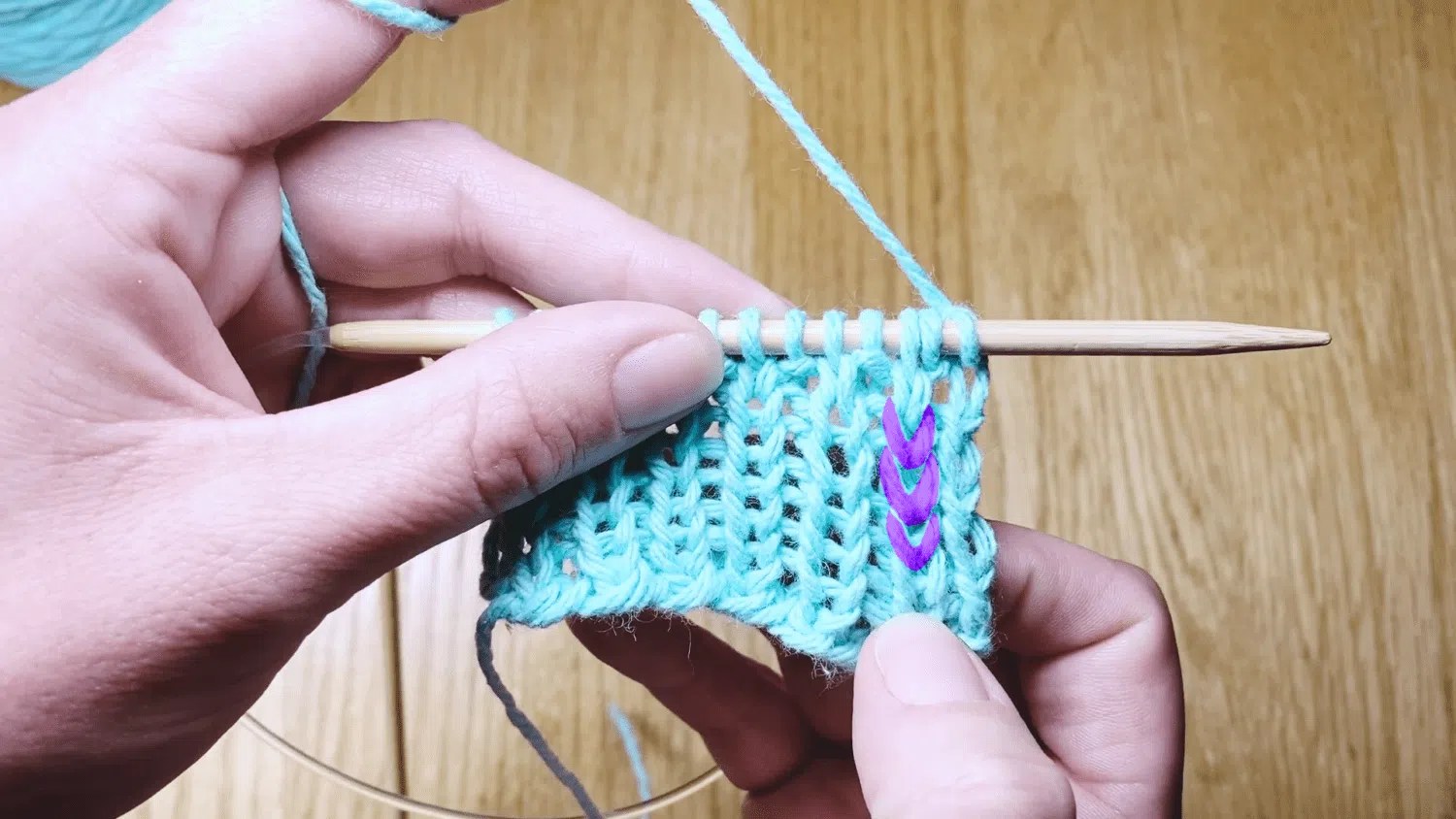
When embarking on the lovely journey of knitting, one may find themselves enthralled by the myriad of stitches that can form the very fabric of creativity. But here’s a playful question: Is knit and purl one row or two? The answer might not be as straightforward as one might hope, and unraveling this question poses a delightful challenge. Let’s navigate through the intricacies of these fundamental stitches, exploring their application to deepen our understanding of knitting.
To grasp the concepts of knit and purl stitches, it is essential first to comprehend their fundamental roles in creating texture. The knit stitch is typically the first stitch learned by novice knitters, as it produces a smooth, V-like pattern on the front of the work. In contrast, the purl stitch introduces a delightful reversal of texture, presenting a bumpy appearance that adorns the fabric’s reverse side. These two stitches are the cornerstones of all knitting projects; they can be combined to form intricate patterns or utilized independently for simplicity.
At its core, a knitting row consists of a series of stitches worked across the width of the fabric. Thus, when a knitter contemplates whether knit and purl comprise one row or two, one must consider the context. If a row is composed solely of knit stitches, then it indeed represents one row. However, should one alternate stitches—knitting for a few and purling for others—the scenario shifts dramatically. This introduces us to the delightful world of knitting techniques.
To elucidate this concept further, let’s explore the common scenarios in which both knit and purl stitches manifest:
- Simple Knit Row: A single row of knit stitches creates a uniform fabric. In this instance, it is clearly one row, as only knit stitches are executed.
- Simple Purl Row: Similarly, dedicating a row to purl stitches also qualifies as one row; only the selection of stitch alters the visual outcome.
- Alternating Knit and Purl Stitches: Here lies the crux of the playful question. If you begin a row with a knit stitch and transition to purl stitches, are you working on one complex row or splitting it into two distinct sections? Conventionally, this remains a single row accompanied by alternating stitches, albeit with varied textures. This method leads to fascinating patterns such as ribbing or seed stitches.
- Returning Rows: In particular stitch patterns, knitters often “turn” their work. When transitioning from a row of knits to a row of purls (or vice versa), the knitter may speak of multiple rows created, where each contributes to the broader tapestry they weave.
Knitting experts often emphasize the importance of understanding gauge and tension. These factors play an essential role in how stitches behave on the needles and subsequently translate into the finished project. Ensuring consistent tension while alternating between knit and purl stitches can become a skillful art. If one is overly tight or loose, the fabric may distort, breaking the intended rhythm and harmony of design.
As one delves deeper into the world of knitting, occasionally complicating matters further, one engages with more advanced techniques. For example, the concept of *Double Knitting* allows for the creation of two layers simultaneously—a tantalizing thought! This method challenges the very notion of row commitment; therefore, distinguishing between knit and purl rows in this scenario becomes more sophisticated and layered.
Knitting does not exist in a vacuum. A comprehensive understanding of stitch combination also necessitates examining the relationship between pattern and fabric. While a singular row may seem straightforward, the nuances arise from the manner in which these stitches interplay with each other across multiple rows. This invites the knitter to embrace complexity, often leading to a captivating crafting experience.
For those who are new to the craft, embracing a swatch can be enlightening. By creating a small sample with alternating knit and purl stitches, one can visually appreciate how each stitch contributes to the overall design. This also serves as a practical exploration of the original question. After all, are we not all in pursuit of not just the answer—but an understanding that enriches our knitting endeavors?
To conclude this delightful investigation, figuring out whether knit and purl represent one row or two largely depends on how one perceives the fabric being created. Each row of knitting inherently consists of multiple actions taken upon the stitches, thereby enriching your project. Thus, consider each row a multifaceted construct, one that weaves together not just yarn but the essence of creativity and the joy of crafting.
So, next time you find yourself wrestling with those two fundamental stitches, remember that the journey through knit and purl is not just about the literal rows. It encompasses the intricate dance of creativity and expression that defines knitting itself.








Leave a Comment