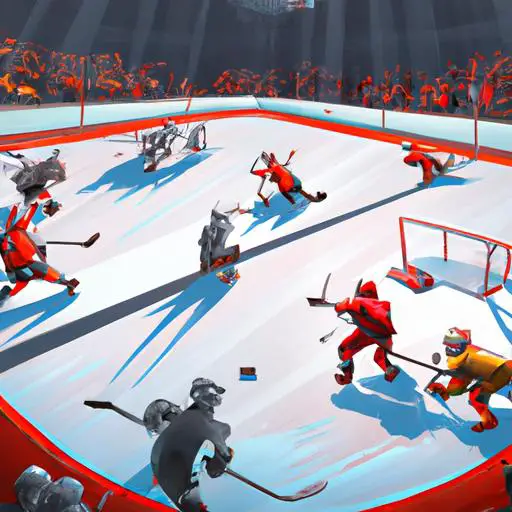
Hockey, known for its exhilarating pace and fierce competition, captivates fans around the world. Yet, behind the rapid movements and dramatic plays lies an intricate structure that governs its timeline. Understanding how long a hockey match lasts is not merely a matter of counting minutes; it invites a deeper exploration of the nuances that shape the experience. In this journey, we will delve into the standard durations, the variations across different leagues, and the contextual factors that influence playtime, thus promising to shift your perspective on what you think you know about the game.
To commence, it is essential to comprehend the fundamental structure of a traditional ice hockey match. A standard game is comprised of three periods, each lasting 20 minutes of playtime. This accounts for 60 minutes, but as any ardent fan would attest, the clock is not the sole determiner of duration. The game clock stops for a variety of interruptions—penalties, goals, and the infamous TV timeouts, are just a few of the elements paving the path to a longer match.
While the game clock ticks down steadily during actual play, the aggregation of stoppages often leads to a total match time of approximately two to three hours. This variability is chiefly attributed to the fluid nature of the sport, with each period featuring potential overtimes or shootouts, especially in knockout stages or tightly contested games.
In the realm of international hockey, the International Ice Hockey Federation (IIHF) adheres to similar timing rules. However, one must note that in some tournaments, should the score be tied after regulation, teams embark on additional overtime periods, potentially extending the match significantly. The first overtime period often lasts 10 minutes and utilizes a sudden-death formation where the first team to score wins—the sudden thrill often engenders an electrifying spirit among players and fans alike.
Another angle to consider is the influence of a game’s specific context. For instance, during the Stanley Cup Playoffs, tension escalates as teams vie for supremacy. Not only may the length of time in overtime stretch due to the nature of elimination rounds, but the incessant energy on the ice undeniably enhances what is technically a straightforward question. Fans can find themselves immersed for much longer than they initially planned, as the stakes transform the atmosphere into something palpably suspenseful.
Moreover, it’s worthwhile to examine the differences in other hockey formats. Consider the fast-paced, exhilarating world of field hockey, where matches consist of two halves lasting 35 minutes each, totaling 70 minutes of play. Although the formats diverge and field hockey may feature fewer stoppages, they too are subjected to breaks often causing matches to extend to over two hours, especially during international contests where strategies and tactics are tightly scrutinized.
The impact of stoppages cannot be understated. Penalty kills, power plays, and injuries are not just interruptions; they infuse the game with strategic depth, often leading to increased excitement. Coaches exploit these moments for tactical advantages, and the changing dynamics can become a game within a game. The studious observer may find themselves transfixed not merely by the clock but by the growing layers of narrative unfolding in real-time on the ice.
Furthermore, technology plays an unprecedented role in the modern game, especially through the implementation of video reviews. These instantaneous inspections force the clock to halt, allowing referees to ascertain the accuracy of goals, and this can substantially amplify the match’s duration, evoking a sense of anticipation among the fans. They hold their breath as the fate of a play hangs in the balance; will it stand, or will it, upon review, be deemed invalid?
Fans should also take into account the pre-game and intermission periods. Though these do not contribute directly to game time, the ceremonious beginnings of a match, complete with national anthems and player introductions, add layers of anticipation that should not be overlooked. Similarly, the intermissions, typically lasting 15 to 18 minutes, allow for crucial discussions, strategizing, and even reflection on the performance thus far. During these breaks, experts often analyze the gameplay, quickly transforming an observed performance into an educational experience.
In conclusion, while a standard hockey match comprises a mere 60 minutes of game time, numerous factors—including stoppages, overtime, and intermissions—collectively shape the match duration. When considering these elements, it becomes evident that a hockey match encapsulates so much more than time; it embodies a rich tapestry of strategic maneuvering, emotional highs and lows, and the sheer unpredictability that makes the sport a resounding spectacle. So, the next time you settle in for a game, remember: what appears to be a simple inquiry about duration is in fact an invitation to immerse yourself in an intricate narrative of competition and camaraderie. The world of hockey awaits, filled with its myriad of intricacies and the stories yet to unfold on the ice.










Leave a Comment