Have you ever considered how a seemingly minor adjustment can spiral into a significant mechanical issue? Indeed, the world of internal combustion engines is riddled with intricacies, and one often overlooked aspect is the tappet clearance. What happens when this clearance becomes too small? The implications can be rather vexing. This article delves into the array of symptoms indicating that your tappet clearance may be insufficently set, along with the potential challenges these symptoms pose for your vehicle’s overall performance.
Understanding Tappet Clearance
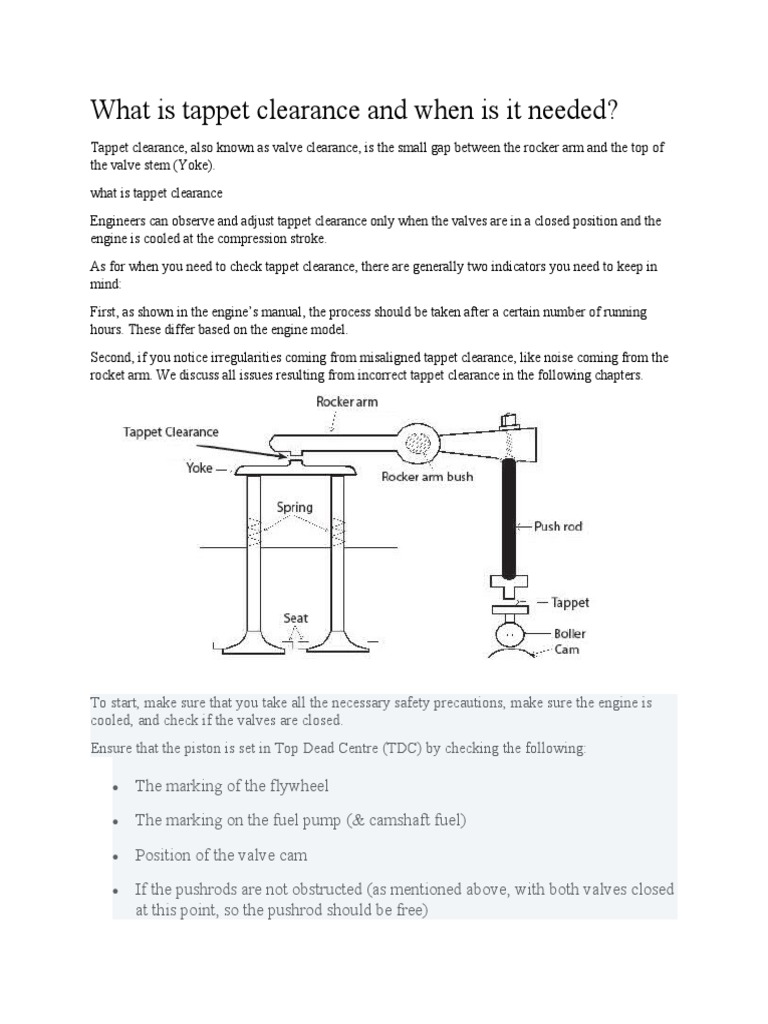
Tappet clearance, also known as valve clearance, is the gap between the end of the valve stem and the tappet. This clearance is crucial for the optimal functioning of your engine, affecting how valves open and close. The failure to maintain proper tappet clearance can cause an array of symptoms that signal trouble ahead.
Symptoms of Insufficient Tappet Clearance
When the tappet clearance is set too small, several symptoms become evident, often serving as precursors to more serious problems if not addressed promptly. Below, we explore some common signs of inadequate tappet clearance:
1. Unusual Engine Noises
One of the first symptoms drivers may encounter is an array of unusual sounds emanating from the engine compartment. A tappet that is too tight can lead to a distinct ticking or tapping noise, particularly prevalent when the engine is idling. This sound arises from the insufficient space that restricts the free movement of the valve train components, creating a symphony of discord where there should be harmony.
2. Loss of Power
A seemingly innocuous change in power output can indicate an underlying issue. An engine with insufficient tappet clearance may exhibit a palpable decline in performance, particularly during acceleration. As valve timing is adversely affected, the engine struggles to breathe, leading to a lackluster driving experience. Pay close attention to how your vehicle responds; this could be more than just a fleeting moment of weakness.
3. Rough Idle
Have you ever experienced that jarring sensation when your engine fails to maintain a steady rhythm while idling? This rough idle can be attributed to improper tappet clearance. When valves do not open and close at the correct times, the engine’s balance is disrupted, resulting in vibrations that send a shudder through the chassis. This symptom is not merely an annoyance but a beacon signaling that something more significant may be amiss.
4. Increased Fuel Consumption
In the quest for efficiency, consumers often overlook the subtle signs that their vehicle may be operating with inefficiencies. A vehicle struggling with inadequate tappet clearance can lead to excessive fuel consumption. The engine compensates for lost power by demanding more fuel, directly impacting your wallet and increasing your carbon footprint. Monitoring fuel efficiency can thus provide critical insight into the overall health of your vehicle.
5. Overheating Engine
One of the more dangerous implications of too little tappet clearance is the tendency for the engine to overheat. A restricted valve timing can cause a myriad of issues, including poor heat dissipation. If your temperature gauge is consistently hovering in the red zone, it may well be time to look into your tappet clearance settings. An engine that overheats can lead to catastrophic failure, making prompt attention vital.
6. Difficulty Starting the Engine
Have you found yourself turning the key, only to be met with labored cranking? Under such conditions, the tappet clearance can contribute to ignition troubles. When the valves’ movement is constrained, the engine struggles to achieve the proper compression needed to start smoothly. This symptom often leads to frustration and could result in you being stranded or late to important engagements.
Potholes on the Road to Solution
Recognizing the symptoms is just the first stepping stone; addressing these issues often involves navigating potential challenges. You might be left pondering whether to tackle the repairs yourself or seek professional assistance. Moreover, understanding the mechanics behind tappet clearance adjustments can be daunting for the uninitiated. Fortunately, with a bit of diligence and possibly some guidance, you can make strides toward resolving these complications effectively.
Addressing Tappet Clearance Issues
If you find yourself nodding in recognition of these symptoms, it’s advisable to consider a thorough inspection of your tappet clearance. Approaching a trusted mechanic for a diagnostic evaluation is often the most prudent path. Whether you opt for a DIY approach or professional servicing, ensure that your tappet clearance is functioning within the specified ranges for your engine type, as this will ultimately prolong the life of your vehicle and enhance performance.
Conclusion
The world of tappet clearance may initially appear esoteric, yet its implications on your vehicle’s health are all too real. From unsettling noises to diminished power and overheating engines, the signs are unmistakably clear. By recognizing and responding to these symptoms swiftly, you can navigate the winding road ahead, steering your car back toward optimal performance. Remember, a crucial piece in the puzzle of engine health is often found in what lies beneath the surface—so pay attention, and don’t let insufficient tappet clearance stall your journey.










Leave a Comment