
Short Answer
An anchor snubber or bridle is a simple but critical piece of gear for any boat that anchors on all-chain rode. Chain is strong and abrasion-resistant, but it has almost no stretch. When wind, waves, or current make the boat surge or yaw, the resulting snatch loads can jerk the anchor, strain deck hardware, and transmit metallic noise through the hull. A snubber—usually a length of three-strand nylon—adds controlled elasticity between the boat and the chain. A bridle does the same job with two legs led to port and starboard, reducing yawing and spreading the load. Used correctly, a snubber or bridle reduces peak anchor loads, protects the windlass, and makes life at anchor quieter and more comfortable.
Main Explanation
What it is
In this context, a snubber is a length of fairly elastic rope placed between a strong point on the boat—usually a cleat or bitt—and a link in the anchor chain. The chain is then slacked to allow the snubber to stretch. A bridle is a two-legged version, typically led to cleats on both sides of the bow, which also helps control yawing. The core purpose is to add elasticity to an otherwise inelastic all-chain rode. According to Cox Engineering, a snubber disconnects the metal connection between the seabed and the forecabin, eliminating the noise of the chain dragging across the bottom, transfers the anchoring load from the windlass, and damps snatch loadings generated by waves and yawing. Practical Sailor notes that the main purpose of a snubber is to reduce loads on the anchor and boat by adding elasticity to the rode.
Why it matters
All-chain rode is strong and abrasion-resistant, but it transmits shock loads almost directly to the anchor and deck hardware. When a boat surges in a chop or yaws in strong wind, the sudden tension spikes—often called snatch loads—can break the anchor out of the seabed, slip the windlass clutch, or damage bow fittings. A snubber absorbs these spikes by stretching, reducing peak loads and making the boat ride more comfortably. The noise issue is also significant: without a snubber, the chain dragging across the bottom or rattling in the bow roller can make sleep difficult and mask other sounds. Good Old Boat describes a nor’easter in which a boat anchored off Atlantic Highlands, New Jersey, broke loose in gusts topping 50 knots; while the cause was not solely a missing snubber, the incident underscores the stakes of poor shock absorption and anchor system failure. Sailors also face conflicting advice about snubber length, diameter, and material. A poorly chosen snubber can be worse than none, because it may give a false sense of security while providing little actual stretch.
How it works
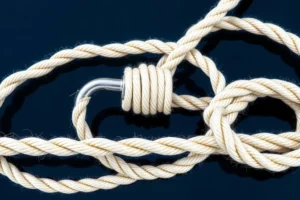
Nylon is the preferred material because it has more elasticity than any other common rope type. Rope construction matters too: three-strand and octoplait have more elasticity than braid-on-braid, according to Cox Engineering. The diameter must be selected carefully to match the size of the boat so that appreciable stretch takes place; as a guide, Cox Engineering uses a 12 mm snubber on a 35 ft boat and can watch it stretch. The snubber is attached to the chain with a chain hook or a rolling hitch, then led through a bow roller or chock to a strong cleat or bitt. The chain between the attachment point and the bow is eased until it hangs slack, so the snubber takes the load. A bridle uses two legs, often led to port and starboard bow cleats, which reduces yawing and spreads the load across two attachment points. Some sailors use a Dyneema bridle for chafe resistance, but because Dyneema has very low stretch, it is usually combined with a nylon snubber section to provide shock absorption. Longer snubbers provide more stretch, but they must be manageable and not so long that they reach the seabed or tangle.
How to do it
Start by assessing the conditions and your boat’s size. Choose a nylon three-strand or octoplait line of a diameter that will stretch under the expected load—not so thick that it behaves like a bar. Deploy and set the anchor with appropriate scope for the bottom and conditions. Attach the snubber to the chain using a chain hook or a rolling hitch at a point that gives you the desired working length from the bow. Lead the snubber through a fairlead or bow roller to a strong cleat or bitt—never the windlass. Ease the chain until the snubber takes the load and the chain between the hook and the bow hangs in a gentle curve. For a bridle, run two legs to port and starboard cleats and adjust so the load is even. Check for chafe where the line passes through chocks or over the roller; add anti-chafe gear if needed. Monitor the setup as conditions change, and adjust the length or add a second snubber if the boat begins to yaw excessively or the snubber bottoms out. When retrieving, take up the slack chain first, then remove the snubber only after the chain is taking the load.
When not to do it
A snubber or bridle is not a substitute for proper anchor selection, adequate scope, or a good bottom assessment. In severe conditions, a snubber can chafe through or be overloaded; it must be inspected regularly and may need to be backed up. If the boat already uses an all-nylon rode, a snubber mainly provides chafe protection rather than additional shock absorption. If the boat lacks strong attachment points, or if the snubber is too short or too thick to stretch, it will not perform its job. For custom setups, high-load scenarios, or unusual boat configurations, consult a rigger or naval architect. Human judgment and physical checks remain essential; a snubber is a mechanical aid, not a guarantee.
Visual
| Setup | Strengths | Limitations | Best For |
|---|---|---|---|
| All-chain rode, no snubber | Strong, abrasion-resistant, simple | No shock absorption, noisy, strains windlass and deck hardware | Short stops or temporary anchoring in calm conditions |
| Single nylon snubber | Simple, effective shock absorption, reduces noise | May allow yawing, single attachment point | Most monohulls in moderate conditions |
| Two-leg bridle | Reduces yawing, spreads load, quieter | More line to manage, can chafe at two points | Catamarans and boats that yaw excessively |
| All-nylon rode with chafe gear | Inherent stretch, no chain weight | Chafe at bow roller, less abrasion resistance on bottom | Lightweight boats or short-scope situations |
Common Mistakes
Using a snubber that is too short or too thick
A short or thick snubber cannot stretch enough to absorb shock loads, so the chain still jerks the boat and anchor. Choose a diameter that allows noticeable stretch and use enough length to provide meaningful elasticity.
Failing to slack the chain after attaching the snubber
If the chain remains taut, the snubber cannot stretch and the system behaves as if no snubber were present. Ease the chain until the snubber takes the load and the chain hangs in a gentle curve.
Attaching the snubber to the windlass or a weak deck fitting
The windlass is not designed to absorb snatch loads; using it as an attachment point can damage gears or cause the clutch to slip. Always lead the snubber to a dedicated strong cleat or bitt.
Ignoring chafe protection
Nylon can wear through quickly where it passes through chocks or over a bow roller, especially when the boat yaws. Use anti-chafe sleeves, smooth fairleads, and inspect the line regularly.
Using low-stretch line for the entire snubber
Dyneema, polyester, and other low-stretch lines provide almost no shock absorption. If you use Dyneema for chafe resistance, combine it with a nylon section that can stretch.
Leaving a worn or UV-damaged snubber in service
A snubber that is stiff, frayed, or UV-damaged can part under load, suddenly transferring full shock loads to the anchor and boat. Inspect before each use and replace when signs of wear appear.
Safety Note
A snubber or bridle is a load-management device, not a substitute for proper anchoring technique. Always assess bottom type, scope, and expected weather before anchoring, and cross-check weather forecasts and tidal predictions with official sources. Keep clear of loaded snubber lines—if a fitting or line fails, it can recoil with lethal force. Use strong attachment points and inspect them regularly. Follow COLREGS and local harbour regulations, including any anchor watch requirements. Take a certified seamanship or safety course; reference articles and digital tools complement, never replace, hands-on training and physical checks. Carry paper charts and a backup navigation method, and never rely on a single electronic device as your only navigation tool.
FAQ
What diameter snubber should I use for my boat?
Choose a nylon three-strand or octoplait line that will stretch under the expected load. As a guide, a 12 mm snubber is used on a 35 ft boat, but larger boats need thicker line and smaller boats can use thinner line. The key is that the line must stretch noticeably; if it is too thick, it will not absorb shock loads.
How long should a snubber be?
Longer snubbers provide more stretch and better shock absorption, but they must be manageable and not so long that they reach the seabed or tangle. Many sailors use a snubber long enough to allow several feet of stretch while keeping the chain hook clear of the bow roller.
Can I use Dyneema for a snubber?
Dyneema has very low stretch, so it is not suitable as the main shock-absorbing element. Some sailors use a Dyneema bridle for chafe resistance, but it should be combined with a nylon section that provides the necessary elasticity.
How do I attach a snubber to chain without a chain hook?
You can tie a rolling hitch directly to the chain. The rolling hitch grips under load but can be released when needed. Make sure the knot is dressed properly and check it regularly.
Should I use a bridle on a monohull?
A bridle can be useful on any boat that yaws excessively at anchor, but it is especially common on catamarans. On a monohull, a single snubber is often sufficient, but a bridle can reduce yawing and spread the load across two cleats.




















Leave a Reply