
Short Answer
A trip line—also called a tripping line or anchor buoy line—is a secondary line attached to the crown or tripping ring of an anchor and led to a surface buoy. Its purpose is to provide a controlled way to free an anchor that has become wedged under rock, coral, or debris by reversing the direction of pull. In rocky or fouled bottoms, where a conventional rode may only set the anchor deeper or lock it in place, a properly rigged trip line can save gear, time, and potentially a dangerous retrieval.
Main Explanation
What it is
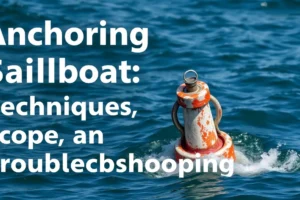
A trip line is a stout, usually floating line connected from the after end of the anchor—typically the crown or a dedicated tripping ring—to a small marker buoy at the surface. The line length is adjusted so that it runs straight up and down at high tide, marking the approximate position of the anchor. If the anchor snags, pulling on the trip line applies force in the opposite direction to the normal rode pull, which can rotate the anchor out crown-first. This article is an independent seamanship reference; the guidance is based on established cruising practice and published sources, not tied to any single boat brand, school, or equipment manufacturer.
Why it matters
Rocky and fouled bottoms present unique risks. An anchor fluke can wedge under a ledge, around a wreck, or into coral or heavy debris. Pulling harder on the main rode often worsens the jam, driving the flukes deeper or locking the shank against an obstruction. A trip line changes the angle of force, allowing the anchor to be lifted from the crown and backed out of the snag. Reliable, independent guidance matters because sailors face conflicting advice: some sources recommend always using a trip line, while others warn against it in crowded anchorages or strong currents. Understanding the mechanics, limitations, and correct rigging is essential for making a sound decision on the water.
How it works
The system is simple but must be rigged correctly. A floating line—commonly 3/8-inch polypropylene—is tied or shackled to the anchor’s tripping ring or crown eye. The other end is attached to a small buoy. The line should be longer than the maximum water depth at high tide, but only just enough to reach the surface without excessive slack. Excess line in the water increases the risk of fouling the propeller or snagging other boats. When the anchor fouls, the retrieval sequence is to motor or drift slowly toward the buoy while taking in the anchor rode. Once nearly above the anchor, pick up the buoy with a boat hook, cleat the trip line, pay out a little rode to reduce tension, and pull steadily upward or opposite to the direction the anchor originally set. This pulls the crown up and should free the flukes. An alternative is the breaking trip line method: fasten the rode directly to the crown or tripping ring, run the chain along the shank, and secure it with light line or cable ties. Under normal load the anchor sets normally; if fouled, a hard pull breaks the ties and transfers the load to the crown, tripping the anchor.
How to do it
For a typical coastal anchorage over a rocky or debris-laden bottom, follow this practical sequence. First, assess the bottom type and maximum expected depth, including tidal range. Choose a floating polypropylene line at least 1.5 times the maximum depth, but avoid excessive length. Attach one end to the anchor’s crown or tripping ring using a shackle or a soft, chafe-resistant loop. Attach a small, brightly colored buoy to the other end; the buoy should be large enough to see but small enough not to create excessive drag. Deploy the anchor normally, paying out the trip line as the anchor descends so it does not tangle with the rode. Monitor the buoy position periodically. If the anchor fouls and cannot be freed by normal rode manipulation, approach the buoy slowly from downwind or downcurrent, taking in the rode as you go. Use a boat hook to retrieve the buoy, cleat the trip line, and ease out a few feet of rode. Then pull the trip line steadily upward and slightly opposite to the original set direction. The anchor should release crown-first. Once free, retrieve the anchor normally and stow the trip line carefully to avoid tangles.
When not to do it
Do not use a trip line in crowded anchorages where other boats may swing over the buoy or line, creating a snagging hazard. Long-term use of a conventional trip line in a busy harbor can draw complaints and risk entanglement. Avoid trip lines in strong currents or deep water where the excess line becomes a serious propeller-fouling risk. Do not rely solely on a trip line if the anchor is deeply buried, the line is undersized, or the bottom is soft mud where the anchor is unlikely to snag. A trip line is not a substitute for proper anchor selection, adequate scope, or good seamanship. If the anchor cannot be freed safely, consider marking the rode with a buoy and cutting it, or hiring a professional diver. In some situations, the safest option is to abandon the anchor rather than risk injury or damage to the boat.
Visual
Step-by-step rigging and retrieval sequence for a trip line and anchor buoy:
- Assess the bottom and depth. Confirm the seabed is rocky, coral, or debris-laden, and note the maximum water depth including tide.
- Select a floating line. Use 3/8-inch polypropylene or similar, cut to about 1.5 times the maximum depth—long enough to reach the surface at high tide without excessive slack.
- Attach to the anchor crown. Secure one end to the tripping ring or crown eye with a shackle or soft loop. Never attach to the shank or the normal rode attachment point.
- Attach a small buoy. Tie a brightly colored marker buoy to the other end. The buoy should be visible but not so large that it creates drag or tangles.
- Deploy the anchor and trip line together. Lower the anchor while paying out the trip line, keeping it clear of the rode to prevent twisting.
- Monitor the buoy. Check that the buoy remains roughly above the anchor and does not drift far, which would indicate excess slack or a tangled line.
- If fouled, approach the buoy. Motor or drift slowly toward the buoy while taking in the anchor rode, keeping the bow into wind or current.
- Retrieve the buoy and pull. Pick up the buoy with a boat hook, cleat the trip line, ease out a little rode, then pull steadily upward and opposite to the set direction to trip the anchor crown-first.
Common Mistakes
Using a line that sinks or is too short
A sinking line can wrap around the keel, rudder, or propeller, and a line that is too short will pull the buoy underwater at high tide, making it impossible to find. Use floating polypropylene and measure for the highest expected water level.
Attaching to the wrong part of the anchor
Attaching the trip line to the shank or the normal rode attachment point defeats the purpose. The line must be on the crown or tripping ring so that pulling it reverses the angle of force and backs the flukes out.
Leaving too much slack in the line
Excess line in the water increases the risk of propeller fouling and entanglement with other boats. The line should be just long enough to reach the surface at high tide, with minimal extra scope.
Using a trip line in a crowded anchorage without monitoring
In a busy harbor, other boats may swing over the buoy or line, snagging it on their keels or propellers. If you must use a trip line in such conditions, monitor it closely and retrieve it as soon as possible, or consider not using one at all.
Pulling the trip line in the same direction as the rode
If you pull the trip line in the same direction the anchor set, you are simply adding force to the jam. The trip line must be pulled upward and opposite to the original set direction to rotate the crown out.
Assuming a trip line replaces proper anchor selection
A trip line is a recovery aid, not a solution for using the wrong anchor or inadequate scope. In rocky bottoms, choose an anchor design suited to the conditions, set it carefully, and use the trip line as a backup, not a primary strategy.
Safety Note
A trip line and anchor buoy should be part of a broader safety framework, never a standalone solution. Always cross-check critical data—weather, tides, and navigation—with official sources before anchoring. Keep a sharp knife accessible to cut the trip line or rode in an emergency, and never allow the trip line to enter the water near the propeller. When approaching the buoy, maintain slow speed and keep crew clear of the line. Digital tools and reference platforms can help you plan, but they complement—never replace—proper training, physical checks, and human judgment. Take a certified seamanship or safety course, follow the COLREGS and local maritime regulations, and carry paper charts as a backup. If conditions deteriorate or the anchor cannot be freed safely, do not hesitate to abandon the gear and motor clear.
FAQ
Can I use a trip line in a crowded anchorage?
It is generally not recommended. Other boats may swing over the buoy or line, snagging it on keels or propellers. If you must use one, monitor it closely and retrieve it as soon as possible, or consider not using a trip line at all in busy harbors.
What line material is best for a trip line?
A floating line such as 3/8-inch polypropylene is best because it stays on the surface and is less likely to wrap around the propeller or keel. Avoid sinking lines, which can create a serious underwater hazard.
How do I retrieve a fouled anchor if the buoy is submerged at high tide?
If the buoy is underwater, the trip line is too short. You may need to motor slowly in a circle around the anchor's estimated position while dragging a boat hook or grapnel to snag the line. To prevent this, always size the trip line for the highest expected water level.
Should I use a trip line every time I anchor?
No. Trip lines are most useful in rocky, coral, or debris-laden bottoms where snagging is likely. In soft mud or sand, a trip line adds unnecessary complexity and prop-fouling risk. Use it selectively based on bottom type and conditions.




Leave a Reply