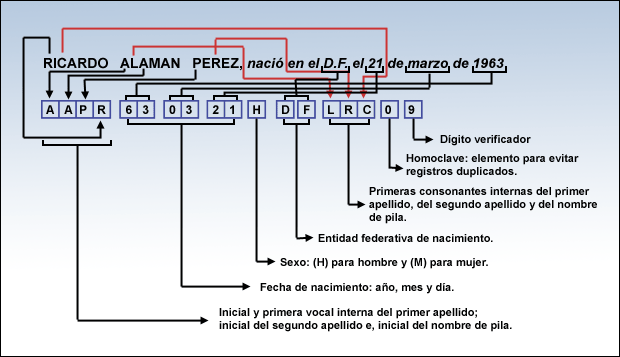
The CURP, or Clave Única de Registro de Población, serves as a distinctive identification number for Mexican citizens and residents alike. This vital registry facilitates various governmental and administrative processes, ensuring that individuals are accurately recognized in official records. One often-posed question among users and officials alike pertains to the presence of accents in Mexican CURP names. Understanding this nuance is crucial for proper documentation and verification purposes, as it can impact the integrity of personal information. This article aims to delve into the intricacies of accents in CURP names, elucidating the significance, rules, and exceptions that accompany this topic.
1. Understanding the CURP Structure
To begin, it is important to grasp the construction of a CURP. The CURP comprises 18 characters, which include a combination of letters and numbers that encapsulate an individual’s name, date of birth, gender, and place of birth. Specifically, the CURP is formatted as follows: the first letter of the surname, the first internal vowel of the surname, the first letter of the first name, and vowels and consonants from various portions of the individual’s name and birth data. For instance, a CURP for someone named Juan Carlos Pérez López born on January 1, 1980, in Mexico City would appear as JPLJ800101MCN. This layout underscores the importance of precise data entry, especially concerning accents in names.
2. The Role of Accents in Spanish Names
In Spanish, diacritical marks, especially accents, serve to indicate pronunciation or differentiate meaning. Accents can alter the way a word is spoken and can also distinguish between two otherwise identical words. For instance, the word “sí” (yes) versus “si” (if) demonstrates this principle. Consequently, names such as María or José carry inherent pronunciations imbued with cultural significance. When recorded in official documents, capturing the exact representation of these names, including their accents, is critical.
3. Do CURP Names Include Accents?
Legally, CURP names should include accents when they exist in the individual’s name. The Mexican government recognizes the importance of maintaining the authenticity of an individual’s identity through accurate representation. Hence, if someone’s name includes an accent—such as in “Estefanía” or “José” —those accents should indeed be present within their CURP. It ensures clarity and acknowledges the cultural identity embodied within these names.
4. The Implications of Missing Accents
Omitting accents from a CURP can lead to confusion and complications. Such discrepancies may create issues for the individual, especially when interfacing with official services that rely heavily on accurate naming conventions for identification and verification. Moreover, missing accents can diminish the individual’s connection to their cultural heritage, inadvertently stripping away an essential element of their identity. As a result, it is crucial for individuals to verify that their CURP accurately reflects the inclusion of any accents present in their legal names.
5. Common Scenarios with CURP Names
Several scenarios reiterate the importance of accents within CURP names. For instance, a person named “Andrés” may find that their CURP recorded as “Andres” leads to discrepancies during transactions that require official identification. Additionally, embassies, government agencies, and financial institutions may face difficulties executing protocols if the CURP name doesn’t match the official document due to missing accents. It is paramount for individuals to routinely check their CURP records to prevent such situations.
6. The Application Process
When applying for or updating a CURP, individuals should pay particular attention to how names are entered in the application form. It is essential to ensure that any accented letters are accurately represented, aligning with the spelling found in one’s official identification. Errors during this stage can lead to prolonged issues that may necessitate a correction process, diverting time and energy. Therefore, attentiveness is vital when providing information during the CURP application procedure.
7. Updating Information
If one discovers that their CURP lacks the necessary accents, there is a process in place for updating this information. Individuals must present valid identification, such as a birth certificate and government-issued ID, that displays their name with the correct accents. Visiting an official government office dedicated to population registration, such as theRegistro Nacional de Población, is essential for initiating this rectification process. Individuals should be prepared to fill out forms outlining their intention to correct the CURP, ensuring the inclusion of any necessary accents.
8. Conclusion
In conclusion, accents in Mexican CURP names play an indispensable role in preserving individual identity. They not only reflect cultural significance but also ensure compliance and accuracy within governmental systems. By acknowledging the importance of accents, individuals can safeguard their personal information while navigating the complexities associated with identity verification. Therefore, it is imperative for those utilizing CURPs to remain vigilant, ensuring their names appear exactly as they are meant to be, complete with any and all diacritical marks that signify their heritage.










Leave a Comment