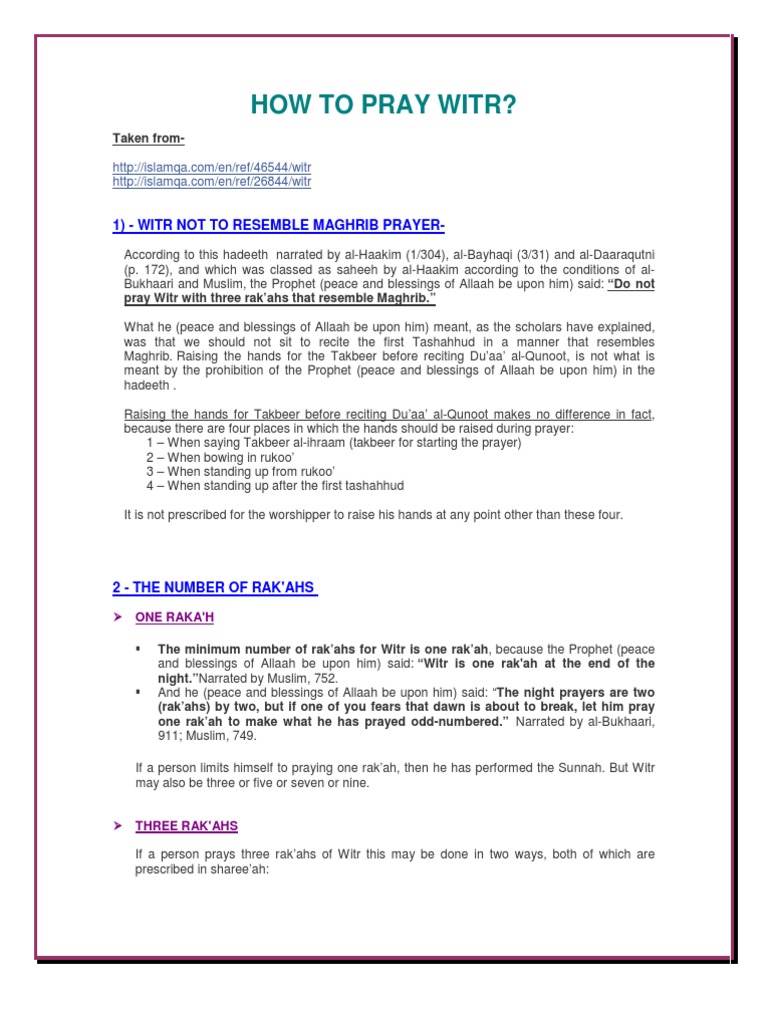
Witr Prayer, a significant act of devotion within Islamic practice, is often offered after the Isha prayer and serves as a means of establishing a profound connection with the Divine. Revered as a sunnah prayer, it holds immense spiritual significance, serving as an opportunity for reflection, repentance, and supplication. In this guide, we will traverse through the steps of performing the Witr Prayer, elucidating its benefits, procedural nuances, and variations that exist within the tradition.
Understanding the Witr Prayer
The word “Witr” signifies “odd” in Arabic, reflecting the prayer’s characteristic of being offered in an odd number of rak’ahs (units of prayer). Typically, three rak’ahs are most commonly observed, although the prayer can be performed with one, five, or seven rak’ahs, depending on individual preference and scholarly interpretation. The essence of Witr is to conclude the day with an emphasis on the oneness of Allah, fostering a sentiment of serenity and gratitude.
Benefits of the Witr Prayer
Engaging in Witr Prayer carries an array of spiritual and psychological benefits:
- Spiritual Cleansing: The act of performing Witr facilitates spiritual purification and the washing away of daily sins, reinforcing a believer’s commitment to their faith.
- Nightly Reflection: Witr serves as a moment for introspection, where individuals can reflect on their day and seek forgiveness and guidance from Allah.
- Enhanced Peace: The tranquility that envelops the Witr Prayer often imbues practitioners with a sense of peace, aiding in stress alleviation and emotional stability.
- Increased Blessings: Engaging regularly in this prayer is believed to invite blessings into one’s life and amplify the chances of having prayers answered.
How to Perform Witr Prayer
With an understanding of its significance, let us delve into the intricacies of performing the Witr Prayer:
1. Prepare Yourself:
Before commencing Witr Prayer, engage in a ritual of cleanliness. Performing ablution (Wudu) ensures physical and spiritual purity. It is advantageous to create a quiet, serene environment, devoid of distractions, where one can focus solely on their conversation with Allah.
2. Intention (Niyyah):
As with all acts of worship, intention plays a pivotal role. Formulate a clear intention in your heart to perform the Witr Prayer for the sake of Allah. This internal affirmation connects the worshiper to their purpose and desired outcome.
3. Number of Rak’ahs:
The Witr Prayer is generally offered in three rak’ahs, although it can be adjusted according to personal preference. For those opting for a singular rak’ah, this is a viable choice, particularly for those who might find the longer ritual burdensome.
4. First Two Rak’ahs:
Begin with the first rak’ah by raising your hands to your ears and proclaiming the Takbir (Allahu Akbar). Recite Surah Al-Fatiha followed by another Surah of your choice. Following the recitation, perform the bowing (ruku) and prostrations (sujud) as per the standard format of regular prayers. This process is to be repeated for the second rak’ah, completing the initial two.
5. The Final Rak’ah:
In the third rak’ah, initiate the prayer similarly, reciting Al-Fatiha and an additional Surah. Upon completing the recitations, you are encouraged to raise your hands and offer the supplication known as the Qunoot. This supplication is a crucial element of Witr Prayer, allowing for personal and communal supplications.
6. Completing the Prayer:
Conclude the Witr Prayer with the tasleem (greeting of peace), turning your head to the right and then to the left, saying “Assalamu Alaikum wa Rahmatullah” to signify the end of your prayer. It is customary for this prayer to be performed in solitude or with other fellow believers, promoting a sense of shared devotion.
Variations of Witr Prayer
The Witr Prayer can be adapted in a few ways to cater to the diverse fabric of individual worship styles:
- Number of Rak’ahs: While three rak’ahs are commonplace, it’s permissible to offer one, five, or even more rak’ahs based on personal preference and time available.
- Qunoot Supplication: The Qunoot can be either a predetermined supplication or one crafted spontaneously, expressing personal needs and concerns to Allah.
- Timing: Witr Prayer is optimally performed after the Isha Prayer but can be offered as part of Tahajjud during the last third of the night for increased spiritual merit.
Conclusion
The Witr Prayer, rich with spiritual rewards and benefits, represents a beautiful opportunity to engage in direct communication with Allah before the day comes to a close. By embracing its practice and understanding the significance it holds within the Islamic faith, individuals not only enhance their spiritual journey but also pave the way for a life imbued with purpose, gratitude, and divine connection. Approach each Witr Prayer with sincerity and reflection, allowing the tranquility and blessings it brings to resound throughout every aspect of life.











Leave a Comment