Have you ever wondered how something as essential as water could contain fluoride, a substance that many consider beneficial for dental health, but others regard with skepticism? The debate surrounding fluoride levels in drinking water continues to swirl, making many question the safety of what flows from their taps. What if the water you sip on daily is not as pure as you think? If you feel compelled to rid your water of this contentious chemical, you’re not alone. Let’s dive into the various methods of eliminating fluoride from your drinking water.
To begin with, understanding the origin of fluoride in municipal water supplies is crucial. Fluoride is often added to water systems to improve dental health, particularly in children. However, various studies have raised concerns about potential health risks, prompting individuals to seek alternative solutions. Thus, the challenge is posed: how can we effectively reclaim our drinking water from fluoride’s grip?
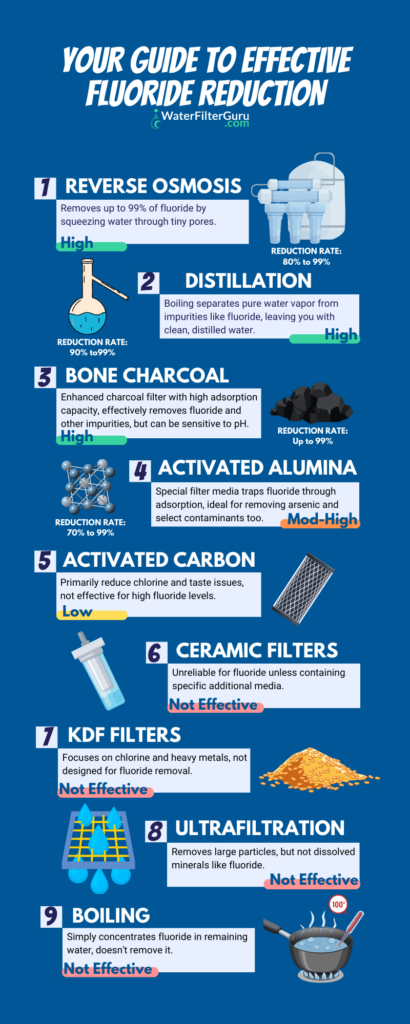
Here’s an extensive guideline on the most effective methods to rid your water of fluoride:
1. Reverse Osmosis Systems
Among the most prevalent methods, reverse osmosis (RO) systems have gained a stellar reputation for their capacity to remove a majority of contaminants, including fluoride. This technique employs a semipermeable membrane to separate substances from water. When you install an RO system under your kitchen sink, it can significantly reduce fluoride levels, often to less than 0.5 mg/L, rendering your water not just safer but also more palatable. Cleaning and maintaining your RO system is essential to ensure optimum performance, as accumulated contaminants can hamper efficiency.
2. Activated Alumina Filters
If you’re seeking a more specialized solution, activated alumina filters should come into play. These filters are made from aluminum oxide and are particularly adept at absorbing fluoride ions. The filtration process requires the use of gravity or water pressure, which allows water to flow through the filter and capture fluoride in the process. However, curing the fluoride from your water isn’t instantaneous. Regular maintenance and periodic replacement of the filter can enhance efficacy, ensuring that you’re not left with an ineffective method.
3. Distillation
Another sophisticated approach is distillation. This method involves boiling water to create steam and then cooling the steam back into liquid water. Distillation effectively separates fluoride and other impurities because they do not vaporize at the same temperature as water. The result is purified water devoid of hazardous substances. However, noted challenges include the energy inefficiency of the process and potential recondensation of airborne contaminants. A home distillation unit may also require substantial space and initial investment.
4. Bone Char Carbon Filters
Digging deeper into unconventional processes, bone char carbon filters present another formidable option. Derived from charred animal bones, this unique filter contains porous structures that absorb fluoride ion, thereby reducing its concentration in water. Although they effectively remove fluoride, there are ethical concerns associated with sourcing animal products. Those who adhere to a vegetarian or vegan lifestyle may hesitate to use this method.
5. Water Pitchers with Filtration Systems
For many, simplicity is vital. Water pitcher systems equipped with specialized filters can offer a user-friendly option for removing fluoride. Models such as those fitted with activated carbon or reverse osmosis capabilities can be a convenient choice for those unwilling or unable to install more extensive filtration systems. While these pitchers won’t possess the high fluoride absorption capacity as dedicated RO or activated alumina systems, they still make a significant impact, particularly for casual usage.
6. Seeking Alternative Water Sources
One might also consider seeking out alternative water sources. Rainwater harvesting has gained traction as an eco-friendly approach that naturally circumvents the issue of fluoride. By collecting rainwater and treating it appropriately, you can enjoy water that is free of various contaminants commonly found in tap water. However, conducting thorough testing of the harvested rainwater to ensure it is free from other harmful constituents is paramount. This method necessitates an investment in collection systems and may be subject to local regulations.
7. Understanding the Role of Water Softening Systems
However, bear in mind that traditional water softeners do not effectively eliminate fluoride. Instead, they primarily remove calcium and magnesium ions, which can create a false sense of security regarding water purity. When considering a comprehensive solution that includes water treatment, integrating a dedicated fluoride removal system with a softening unit is advisable.
Conclusion
In conclusion, eradicating fluoride from your drinking water can be a convoluted journey, but it is certainly traversable. From reverse osmosis systems that purify with precision to the traditional yet reliable method of distillation, the options are as diverse as individual preferences. The careful consideration of each method’s advantages and limitations will empower you to make an informed choice based on your unique circumstances. What will you choose to ensure the purity of your water? Ultimately, safeguarding your health obliges you to become proactive in understanding what lies within the liquid you consume daily. Let the quest for pure water commence!











Leave a Comment