Honey is nature’s golden elixir, a sweet serenade from the hive that transcends mere sweetness. It is a product of alchemy, where the diligent bees toil under the sun to transform nectar into a viscous treasure that captivates the senses. Just as the ancient Egyptians revered honey for its myriad uses, we must likewise cherish its unique allure by storing it correctly. This guide will explore the multifaceted aspects of honey storage, ensuring that your jar of liquid gold remains unblemished and delightful for years to come.
1. Understanding Honey’s Composition
Before delving into storage methods, one must grasp the intrinsic properties of honey. Comprising primarily fructose and glucose, honey is a supersaturated solution that boasts natural preservatives, granting it remarkable longevity. Its low moisture content discourages the growth of bacteria and mold, allowing it to maintain its integrity over time. This fascinating chemistry is what makes proper storage not just beneficial, but essential.
2. Choosing the Right Container
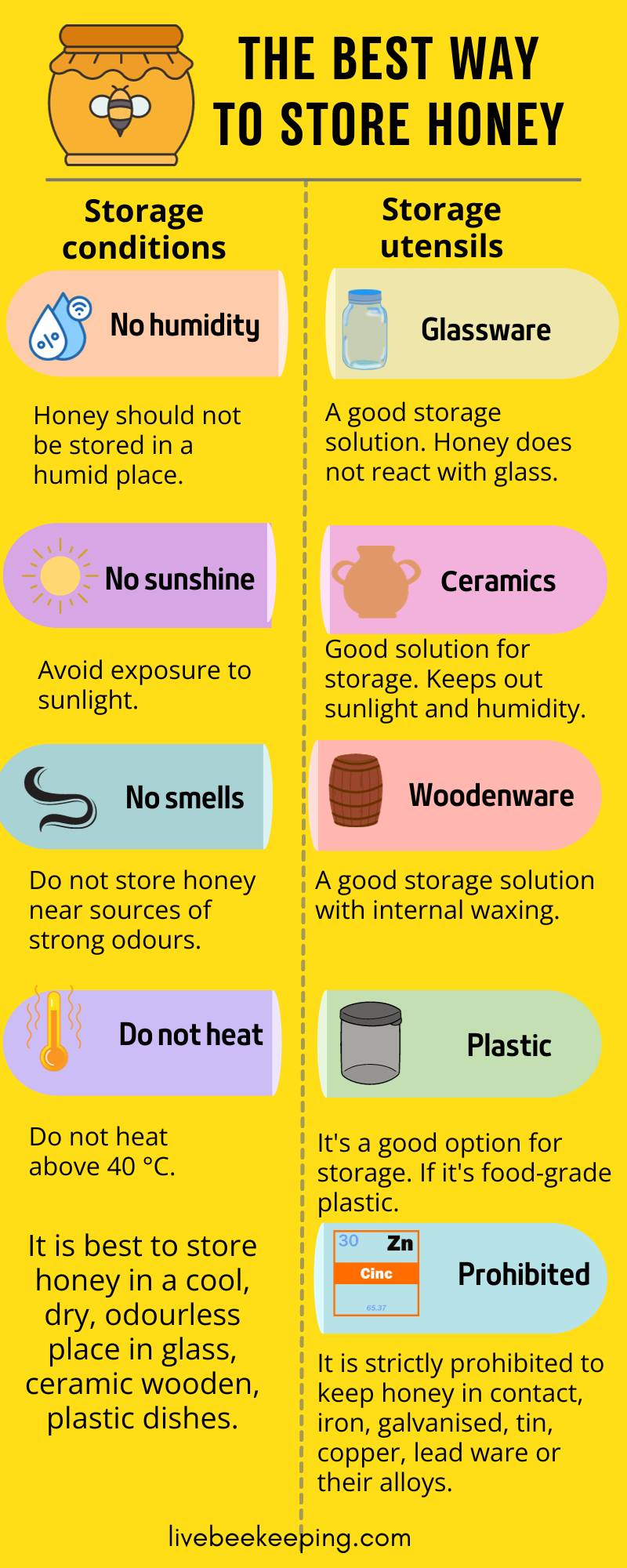
Like a treasure chest safeguarding jewels, the container you select for your honey can greatly influence its longevity. Opt for glass jars, which are non-reactive and impervious to flavor alteration. Plastic containers, while lightweight and convenient, may leach chemicals over time. If you must use plastic, ensure it is food-grade and devoid of BPA. Airtight seals are paramount; they prevent the sweet ambrosia from absorbing moisture and odors from its surroundings, preserving its exquisite flavor profile.
3. Ideal Storage Conditions
To extend the life of your honey, consider its ideal habitat. A cool, dry place far from direct sunlight is the optimal sanctum. Honey loves to thrive around temperatures of 50 to 70 degrees Fahrenheit. In this sanctuary, the honey remains stable, allowing its complex flavors to mature like a fine wine. Avoid refrigeration, as it encourages crystallization, transforming the liquid gold into a grainy mass that may seem undesirable. Rather, let it reside in your pantry, where it can remain undisturbed.
4. Recognizing and Managing Crystallization
As time progresses, honey may gradually metamorphose from its liquid state to a crystalline one. This transformation is akin to ice forming on a river, and while it might seem alarming, it is a natural phenomenon. The crystallization process signifies the purity of honey, revealing its floral origins. Should you prefer the liquid form, gently warm the jar in a warm water bath. Avoid using a microwave—this can create hotspots, damaging the honey’s delicate properties. Patience is key; the slow and languid warmth will restore it to its original glory.
5. The Importance of Hygiene
To keep your honey as pure as its intentions, ensuring cleanliness is crucial. Always use a clean, dry spoon to extract honey from its jar. Contaminants can introduce moisture and bacteria that may disrupt this delicate balance, leading to spoilage. If you notice moisture droplets on the lid or within the jar, it may be time to reassess your storage conditions. Keep this treasure guarded like a crown jewel, preserving its integrity with every precise extraction.
6. Avoiding Flavour Contamination
Honey is a sponge, eagerly absorbing odors and flavors from its environment. Therefore, it is essential to store it in a location isolated from strongly scented substances. Perfumed products, herbs, or even certain types of fruit can tamper with the honey’s natural bouquet. Imagine a pristine canvas sullied by errant colors; such is the tragedy of flavor contamination. To prevent this, place honey in an area devoid of competing scents, allowing its own complex aroma to flourish unimpeded.
7. Long-Term Storage Considerations
If you are fortunate enough to have excess honey, consider long-term storage techniques. Vacuum sealing can drastically extend honey’s shelf life by reducing its exposure to air. Alternatively, consider a honey cellar—an insulated space that maintains stable temperatures. Preserve jars of varying floral origin, allowing you to savor the distinct nuances of each variety. Like a curated collection of wines, your assortment can provide unique experiences each time you indulge.
8. The Lifespan of Honey
Under ideal conditions, honey possesses an indefinite shelf life, making it an astounding choice for both culinary and medicinal uses. Ancient ruins have yielded honey pots dating back millennia, showcasing its remarkable preservation attributes. This means that if stored correctly, your honey can become a timeless companion in your kitchen—waiting patiently to enhance your tea or elevate your culinary creations.
In conclusion, the art of honey storage invites us to appreciate the intricate journey it undertakes from the hive to our tables. With careful consideration of its unique attributes, a thoughtful selection of containers, and an awareness of the surrounding environment, we can preserve its enchanting essence. Like an ancient elixir, honey has the potential to endure, offering sweet rewards for generations to come. By protecting this golden nectar, we not only honor its legacy but also enrich our palates with timeless delights.










Leave a Comment