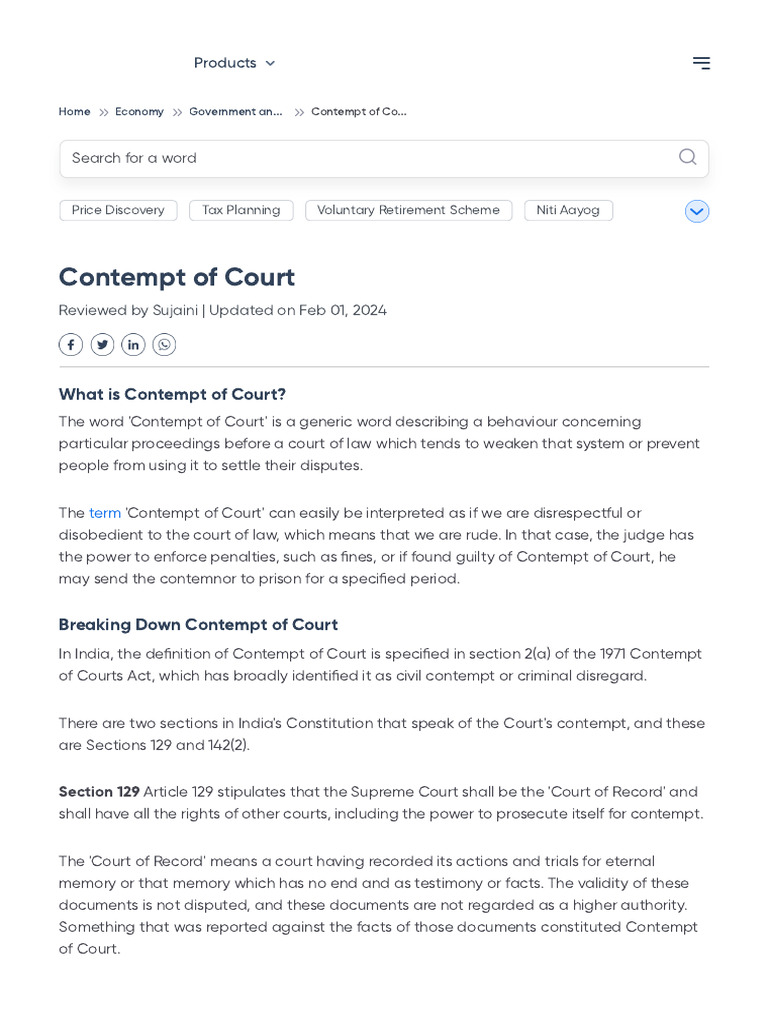
Understanding the legal ramifications of contempt of court is essential for anyone navigating the judicial system. This article delves into the nuances of contempt of court, including its various forms, the distinction between criminal and civil contempt, and the implications for those found in violation of court orders. Readers can expect an extensive exploration of the topic, shedding light on the seriousness of this legal concept.
Contempt of court is an integral mechanism designed to uphold the authority of the judicial system and ensure that court proceedings are conducted in a civil manner. It encompasses any behavior that disrespects the court’s authority or obstructs the administration of justice. However, whether contempt of court is classified as a felony can depend on several factors, including the nature of the contempt and the jurisdiction in which it occurs.
Types of Contempt of Court
Contempt is broadly categorized into two primary types: civil contempt and criminal contempt. Understanding the distinction between these two forms is vital when considering the consequences associated with each.
Civil Contempt
Civil contempt typically arises in situations where a party fails to comply with a court order. The main objective of civil contempt is to compel compliance and ensure that the court’s orders are observed. For instance, in family law cases, a parent might be held in civil contempt for failing to pay child support as ordered by a court. In such cases, the court may impose sanctions until the parent remedies the situation.
Civil contempt is generally not considered a felony. Instead, it is often seen as a remedial measure, and the individual labeled in contempt can typically purge themselves of the contempt by complying with the court’s order.
Criminal Contempt
Conversely, criminal contempt is directed at punishable offenses that disrupt court proceedings or disrespect the court’s authority. This may include actions such as yelling at a judge, deliberately disobeying a court order, or obstructing the judicial process. The primary aim of criminal contempt is punishment and deterrence rather than compliance.
Criminal contempt can indeed carry felony charges, especially if the actions involved are severe enough to warrant harsher penalties. For instance, in cases where a defendant engages in violent behavior in the courtroom, courts may impose felony charges. The consequences of such contempt can include significant fines and imprisonment.
Jurisdictional Variations
It is crucial to recognize that definitions and consequences of contempt vary by jurisdiction. Different states may have varying statutes defining what constitutes contempt and the penalties associated with it. Some jurisdictions have more draconian measures, while others may adopt a more lenient approach, focusing on compliance rather than punishment. It’s essential for individuals and legal practitioners to familiarize themselves with the particular laws that govern their jurisdiction, as this can greatly influence the classification of contempt as a felony or misdemeanor.
Legal Defenses to Contempt
While facing contempt charges can be daunting, several legal defenses may be available. Individuals accused of contempt can argue impossibility of compliance—asserting that it was impossible to follow the court’s order due to circumstances beyond their control. Additionally, demonstrating a lack of willfulness can serve as a solid defense; if a person can show they did not intentionally disregard a court order, this may absolve them of contempt.
Moreover, statutory defenses may also exist. For example, certain jurisdictions may allow individuals to contest contempt charges based on specific statutory exemptions, further emphasizing the need to consult legal professionals who can navigate these intricacies effectively.
Consequences of Contempt
The implications of being found in contempt of court vary widely depending on whether the charge is civil or criminal. Penalties for civil contempt are often remedial—designed to compel compliance, such as monetary fines or even incarceration until the individual complies with the court’s order. This punitive measure underscores the court’s authority and encourages adherence to its rulings.
On the other hand, criminal contempt can result in more severe repercussions, including lengthy prison sentences and substantial fines, especially in egregious cases. The gravity of the situation amplifies when the contemptuous behavior endangers public safety, impedes a lawful court process, or poses risks to the judicial system’s integrity.
Conclusion
While contempt of court is an essential tool for maintaining order in the judicial system, its classification as a felony or misdemeanor varies greatly based on numerous factors. Whether through civil or criminal contempt, the repercussions underscore the importance of adhering to court orders and respecting the rule of law. Understanding the complexity of contempt laws is crucial, as violations can result in serious legal consequences. Individuals involved in legal proceedings should seek knowledgeable counsel to navigate their circumstances, ensuring compliance with court mandates while safeguarding their rights.











Leave a Comment