As the summer heat envelops us, the function of a fan becomes more than just a simple method of beatitude. Instead, it transforms into an essential apparatus that can significantly enhance one’s comfort. Yet, a pervasive question arises amidst the clamor of warm days and balmy nights: which way does a fan go in the summer? To unravel this inquiry, one must delve deeper into the mechanics of airflow and the synergy between temperature and comfort.
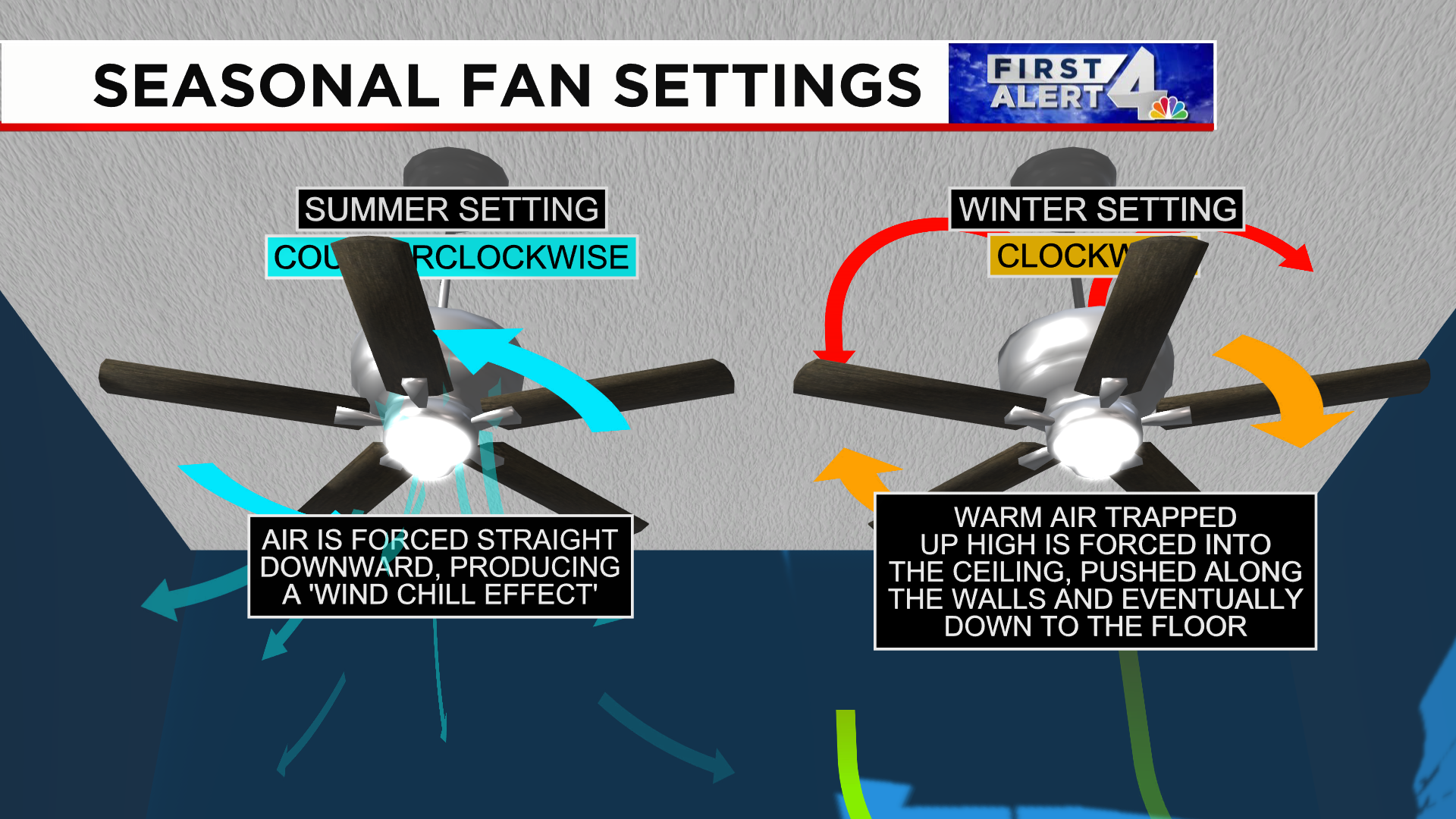
When considering the directional flow of a ceiling fan, one must first acknowledge its dual functionality. Most ceiling fans come equipped with a switch that allows for reversible rotation. In the warmer months, the fan blades should rotate counterclockwise. This orientation creates a downdraft, pushing cool air downward, while simultaneously promoting circulation within the room. The result? A refreshing breeze that can make the ambient temperature feel several degrees cooler than it truly is.
The principle behind this effect is fundamentally rooted in the science of thermodynamics. As the fan blades spin counterclockwise, they displace air particles downward. This action serves two crucial purposes: it replenishes the warmer, stagnant air near the ceiling with cooler, fresher air from below and augments the process of evaporative cooling on the skin. When air moves across the skin, it accelerates the evaporation of sweat. This phenomenon creates a cooling effect that is significantly more perceptible, enhancing one’s overall comfort in sweltering conditions.
Conversely, ceiling fans can be adjusted for winter usage by switching the blades to rotate clockwise. Such a configuration is intended to draw air upward, redistributing the warm air that tends to rise and linger near the ceiling. However, this exploration primarily concerns summer applications. For our current focus, let’s examine the subtleties behind that essential counterclockwise rotation.
While many may fixate solely on the cooling aspect of fans, it is crucial to recognize the broader implications of airflow in relation to indoor climate. Ventilation plays an integral role in maintaining not only comfort but also air quality. By mobilizing air throughout a space, a ceiling fan can alleviate the concentration of particles and pollutants that inevitably accumulate indoors. Thus, while the primary focus might be immediate temperature relief, the broader benefits extend to creating a healthier living environment.
Moreover, the interplay between fans and ambient temperature is a fascinating subject. People often underestimate how a simple fan can complement other cooling systems, such as air conditioning units. In fact, when utilized concurrently, fans allow air conditioners to operate more efficiently. By effectively circulating cool air generated by the AC, a fan can potentially enable the thermostat to be set a few degrees higher without sacrificing comfort. This synergy not only provides a means of relief but also leads to a more energy-efficient household, a notion that resonates deeply in an environmentally conscious society.
Yet, as with any household device, there are nuances to consider. The size of the room, the height of the ceiling, and even the fan’s RPM (revolutions per minute) can impact its effectiveness. A fan that is too small in relation to the room may struggle to create adequate airflow, while excessively high speeds could lead to overwhelming wind gusts that detract from comfort. Individuals often overlook these details; thus, it is crucial to select the appropriate fan size and settings to optimize its utility in summer climates.
Beyond technical considerations, the aesthetic appeal of ceiling fans adds another layer to their significance. In contemporary home design, fans are not only functional but also serve as vital design elements, harmonizing with the overall style and ambiance of a space. Selecting a fan that complements the decor enhances the visual coherence of a room while providing necessary comfort. Whether vintage, modern, or whimsical, the right fan can seamlessly integrate into any environment, merging practicality with artistry.
As summer days stretch out and the sun blazes overhead, the simplicity of understanding which way a fan goes can yield profound insights into human comfort. What seems like a trivial choice holds a celebratory essence of innovation, science, and aesthetic balance. The fan, whether subtly rotating overhead or visibly whirling in the corner, embodies a marriage of function and form that appeals to our intrinsic desires for comfort, efficiency, and beauty.
In conclusion, as we navigate the sweltering days of summer, the query of a fan’s directional orientation transcends its basic function. By embracing the counterclockwise rotation, homeowners can optimize airflow, enhance comfort, and promote healthier indoor climates. This small yet significant adjustment contributes to a greater understanding of our environmental interactions, ultimately ensuring that we remain cool amidst the summer blaze. So, the next time you step into a room adorned with a fan, take a moment to appreciate not just the cool breeze but the elegance of its design and its vital role in your comfort.








Leave a Comment