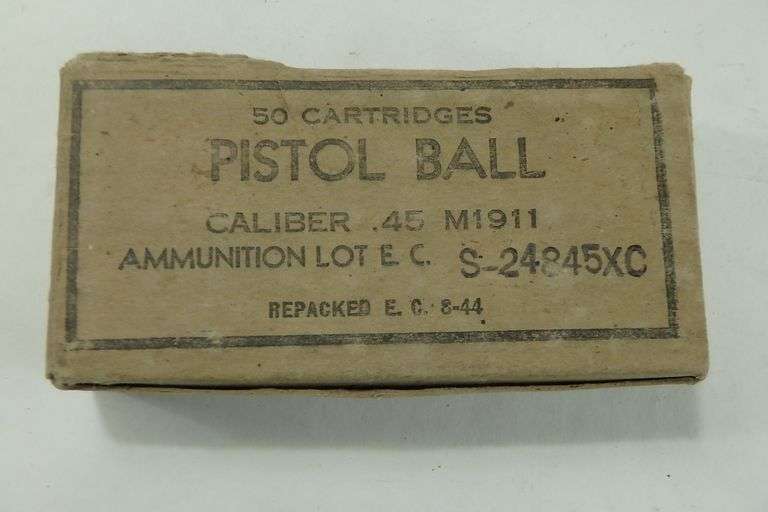
In the annals of military history, few items encapsulate the essence of combat as profoundly as the .45 ACP (Automatic Colt Pistol) ammunition case. While World War II (WWII) might be often examined through the lenses of larger-than-life battles and strategic maneuvers, the story of the .45 ACP case reveals a more nuanced perspective—one that explores the evolution of weaponry and its pivotal role in shaping modern warfare. This exploration not only highlights technical specifications and historical contexts, but also illuminates the unexpected advancements that influenced soldier safety and performance on the battlefield.
The .45 ACP cartridge was born out of necessity, stemming from the inadequacies of previous military rounds, particularly the 9mm and .38 Special. Developed by John Browning in the early 20th century, the .45 ACP was designed to deliver potent stopping power, making it a preferred choice for military and law enforcement personnel alike. As the United States plunged into WWII, this cartridge became a staple, embodying both technological innovation and the grim realities of armed conflict.
During the war years, the .45 ACP distinguished itself through its robust construction. The casing, often crafted from brass, showcased remarkable durability—an essential attribute for sustaining the rigors of military use. This ammunition was not merely a product of manufacturing; it represented a paradigm shift in how firearms were designed and utilized. The adoption of the .45 ACP was interlinked with the deployment of the M1911 pistol, a masterpiece of American engineering that became synonymous with the U.S. military.
Intriguingly, the M1911 was not only revered for its mechanical reliability but also for the psychological impact it had on both soldiers and adversaries. Holding a weapon that fired the .45 ACP cartridge brought with it a sense of confidence, a belief rooted in its ability to incapacitate an enemy in a singular shot. This phenomenon highlights an underappreciated facet of warfare: the interplay between psychology and technology, and how each can alter the landscape of battle.
As the tides of war turned, the operational demands on soldiers necessitated the evolution of ammunition design. The .45 ACP was adapted for various uses, from standard ball ammunition to hollow points and tracer rounds. Each variant served a specific purpose, whether it was maximizing lethality or facilitating targeting in low-light conditions. Such adaptability illustrates the ingenuity behind WWII logistics and armaments, emphasizing the need for continuous improvement in military resources.
The historical trajectory of the .45 ACP ammunition case also mirrors larger trends in American manufacturing and wartime production. Factories were retooled to meet the escalating demand for arms, and the wartime economy resulted in innovations that would resonate long after the global conflict had ceased. This era marked a significant departure from pre-war standards and showcased the impressive capacity of American industry to mobilize quickly and efficiently.
As soldiers returned from the European and Pacific theaters, the efficacy of the .45 ACP case did not fade with the war. Instead, it carved a lasting legacy within both military and civilian spheres. The firearm landscape shifted, as retired servicemen brought home their experiences and knowledge, fostering a culture of responsible firearm ownership and self-defense. The .45 became emblematic of American resilience and an enduring symbol in the fabric of gun culture across the country.
The narrative of the .45 ACP ammunition case is also interwoven with stories of individual soldiers. Many veterans could attest to the reliability of their sidearm, recanting tales of survival and triumph. These personal anecdotes add layers of intrigue to the .45 ACP’s reputation, making it not merely a tool of war but a companion in the harrowing journeys of those who wielded it. It’s fascinating to consider how a seemingly mundane object became intertwined with identities and legacies, forever altering lives in the process.
Furthermore, the post-war evolution of the .45 ACP case set the stage for developments in law enforcement and civilian use. As crime rates fluctuated and the nation faced new challenges, the demand for effective self-defense solutions surged. The .45 ACP’s robust ballistics made it a popular choice among law enforcement agencies, who valued its stopping power during turbulent times. This transition from battlefield to sheriff’s office underscores the versatile application of the ammunition case, showcasing its multifaceted relevance beyond military engagements.
The historical significance of the .45 ACP ammunition case serves as a lens through which we can examine broader themes of conflict, innovation, and adaptation. As warfare evolved, so too did the technology that influenced victory or defeat. The .45 ACP stands as a testament not only to engineering prowess but also to the stories and sacrifices that shaped the course of history.
In retrospect, examining the .45 ACP ammunition case during WWII encourages a deeper appreciation for the intricate interplay of technology, psychology, and personal narrative within the tapestry of military history. Whether one views it as a cold piece of metal or a storied artifact, its role in transforming the landscape of warfare is undeniable. Understanding its provenance propels a shift in perspective, inviting curiosity about the multifaceted legacies left by such seemingly simple components of combat.











Leave a Comment