
Short Answer
A trip line and anchor buoy are simple but often misunderstood pieces of anchoring gear. When rigged correctly, they give a recreational sailor a reliable way to locate a set anchor and, more importantly, to free it if the flukes become wedged under rock, cable, or debris. Used carelessly, however, the same line can wrap around a propeller, snag another boat’s rudder, or create a false sense of security. This article explains what a trip line is, how to rig and use it safely, and when it is better left in the locker.
Main Explanation
What it is
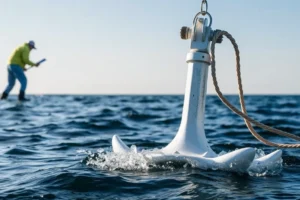
A trip line is a secondary line attached to the after end of the anchor fluke or to a dedicated tripping point on the anchor crown, led vertically to a small surface buoy. Its purpose is not to add holding power but to provide a reverse-direction pull that can break the anchor free if the main rode cannot. The buoy marks the anchor’s position and gives the crew something to grab when retrieval becomes difficult. Practical Sailor describes a conventional trip line as a stout line connected from the after end of the anchor fluke to a marker buoy, with length adjusted to be straight up and down at high tide. Dirona Around the World emphasizes that the goal is to unhook the flukes by picking up the anchor from the crown, not to pull it out by brute force.
Why it matters
Anchors frequently set in unknown bottoms. A rocky seabed, a discarded mooring chain, a submerged tree, or a wreck can trap a fluke so firmly that the main rode cannot free it. Without a trip line, the choices are often grim: cut the rode and abandon the anchor, attempt a hazardous dive, or strain the windlass and deck gear until something breaks. A properly rigged trip line offers a controlled alternative. It also helps in crowded anchorages where a boat may need to leave quickly and wants to know exactly where its anchor lies. But the same line creates new risks: it can snag other boats’ propellers or rudders, and long-term use in a busy harbor may draw the ire of other cruisers, as Practical Sailor notes. Sailing Today’s Tom Cunliffe warns that the downsides of a tripping line can be hard to ignore unless the chart shows foul ground or similar hazards.
How it works
The system has three main components: the trip line itself, a small buoy or fender, and a secure attachment at the anchor’s crown or tripping eye. The line should be strong enough to take a sharp pull but light enough to handle easily; many cruisers use 1/4 to 3/8 inch (6-10 mm) floating polypropylene or polyester line, though Dirona Around the World notes that even 1/8 inch line is not meant to pull the anchor out by force. The buoy must be visible but not so large that it creates excessive drag or becomes a hazard. The line length is set so the buoy sits directly above the anchor at high tide, with a little slack to allow for tidal rise. When the anchor is fouled, the crew motors slowly to the buoy, picks up the trip line, pays out some main rode to reduce tension, and then pulls the trip line from the crown. This reverses the direction of force and can roll the anchor out of the obstruction.
How to do it
A practical walkthrough for a coastal anchorage with a suspected rocky or debris-laden bottom begins with inspecting the anchor for a tripping point or crown attachment. Many modern anchors have a hole at the crown; if not, a soft shackle or a rolling hitch around the crown can work, but it must not interfere with the flukes. Attach the trip line and buoy, then lower the anchor and rode as usual, paying out the trip line separately so it does not tangle. After the anchor sets, adjust the trip line length so the buoy is directly above the anchor at high tide; too much slack invites prop entanglement, too little will pull the buoy under at high water. Monitor the buoy periodically. If the anchor fouls on retrieval, stop winching, motor to the buoy, retrieve the trip line, slack the main rode, and pull steadily on the trip line from the crown. Once free, recover the anchor normally and stow the trip line.
When not to do it
A trip line is not a universal solution. In a crowded anchorage, a floating buoy and vertical line can snag other boats’ propellers, rudders, or keels, especially as boats swing. Practical Sailor warns that long-term use of a conventional trip line in a busy harbor risks snagging and can draw ire. In strong currents or weed, the buoy may be dragged under or the line may wrap around the rode. If the anchor is deeply buried in soft mud, a trip line is unlikely to help because the flukes are not hooked on an object. And if the obstruction is a heavy chain or cable, pulling from the crown may not free it; a professional diver or cutting the anchor may be the only safe option. Do not rely on a trip line as a substitute for choosing a clear anchorage or for proper anchor retrieval technique.
Visual
The following step sequence shows a safe rigging and retrieval routine for a trip line and anchor buoy.
- Check the anchor for a crown or tripping eye attachment point.
- Attach a strong, chafe-resistant trip line to the crown, not the fluke tip.
- Secure a small, brightly colored buoy to the other end, leaving enough line for high tide plus a little slack.
- Lower the anchor and rode while paying out the trip line separately to avoid tangles.
- After the anchor sets, adjust the buoy so it floats directly above the anchor at high water.
- If the anchor fouls, motor slowly to the buoy, pick up the trip line, slack the main rode, and pull from the crown to roll the anchor free.
Common Mistakes
Using a trip line that is too weak
A line that parts under load leaves the anchor still fouled and may snap back. Use a line strong enough for a sharp pull, but remember it is for reversing the pull, not for winching the anchor out by force.
Attaching the line to the wrong point
Attaching to the fluke tip or the shank does not provide the correct reverse leverage. The line must be at the crown or tripping eye so the pull rotates the anchor out of the obstruction.
Making the line too long or too short
Too much slack creates a large loop that can wrap around the propeller or another boat. Too little line pulls the buoy under at high tide, making it useless. Adjust for high tide and add only a small amount of slack.
Leaving the buoy unmarked or hard to see
A small, dark buoy is easy to lose in chop or poor light. Use a bright, reflective buoy or fender, and consider a small weight to keep the line vertical without dragging the buoy under.
Relying on the trip line to pull the anchor out by force
The trip line is not a tow line. Pulling hard from the surface can damage the anchor, the boat, or the crew. The correct technique is to slack the main rode and pull steadily from the crown to unhook the flukes.
Using a trip line in a crowded anchorage without considering others
A vertical line and buoy can snag other boats’ propellers and rudders as they swing. If you must use one, keep it as short as possible, mark it clearly, and retrieve it as soon as possible. In a busy harbor, it may be safer to forgo the trip line and choose a clear spot.
Safety Note
A trip line and anchor buoy are aids to seamanship, not replacements for it. Before relying on any anchoring gear, check the weather forecast and tidal range from official sources, and confirm that the anchorage is clear of cables, pipelines, and other hazards. Never use a trip line as your only means of anchor recovery; always have a plan for cutting the rode or calling for professional help if the anchor cannot be freed. Keep the trip line well clear of the propeller and rudder, and brief the crew on the retrieval procedure before you need it. When using digital planning tools or reference platforms, cross-check critical navigation and weather data with official maritime sources, and carry paper charts as a backup. Follow the International Regulations for Preventing Collisions at Sea (COLREGS) and any local harbor rules, including requirements for anchor buoys and day shapes. Finally, take a certified sailing and safety course to build the judgment that no article or app can provide.
FAQ
What size trip line should I use?
Most recreational boats use 1/4 to 3/8 inch (6-10 mm) line. It must be strong enough for a sharp pull but is not meant to winch the anchor out by force. Floating line reduces the risk of sinking and tangling, but any line can still wrap around a propeller.
Can I use a trip line in a crowded anchorage?
It is usually not advisable. A vertical line and buoy can snag other boats' propellers, rudders, or keels as they swing. If you must use one, keep it as short as possible, mark it clearly, and retrieve it as soon as possible. In a busy harbor, it may be safer to choose a clear spot and forgo the trip line.
How do I retrieve a fouled anchor with a trip line?
Stop winching, motor slowly to the buoy, pick up the trip line, pay out some main rode to reduce tension, and pull steadily on the trip line from the anchor crown. This reverses the direction of force and can roll the flukes out of the obstruction. Do not use the trip line to pull the anchor out by brute force.
What if the buoy is pulled underwater at high tide?
The trip line is too short. Adjust it so the buoy floats directly above the anchor at high tide with only a small amount of slack. If the buoy still submerges, use a larger buoy or a longer line, but avoid excessive slack that can tangle.


























Leave a Reply